2026 is already looking like a monumental year for films, but some are coming to cinemas that might not have caught your eye just yet.
Oscar Trinick had the pleasure of attending the London Film Festival last year, and there are some films he saw that are yet to be released theatrically.
Film News Blitz’s cinephile gives us his recommendations on what to look out for this year.
‘Rose of Nevada’
From Cornish filmmaker Mark Jenkin comes Rose of Nevada, a film shrouded in seasick mystery.
After a strange boat returns to a seaside village on the English coast 30 years after vanishing, Nick (George MacKay) and Liam (Callum Turner) join its crew, but after one voyage, they find themselves transported back in time. If that couldn’t be any stranger, once arrived, they are seemingly mistaken for the original crew.
I’ve always been critical of filmmakers who have a fetish with shooting things on film for the sake of petty nostalgia, or, in turn, trying to create some cheap pastiche. Jenkin is accustomed to not only shooting his own films, but also shooting on hazy 16mm film, like in another one of his features, Enys Men.
Mark completely avoids any allegations of that cheap nostalgia, not by wandering away from the idea of it, but by weaponising its own existence as a part of the film. He forms a fascinating contradiction between the nostalgia for the archaic ways of the medium and a narrative that refuses to reconcile with the present, one that has one foot stuck in the past.
The accidentally stuck in the past sub-genre is one that has run its course in many a commercial way, but Jenkin feeds it new life through one of contemporary cinema’s biggest obsessions. Have our compulsions for celluloid gone too far, and what is the price to pay if we stay with it for too long?
A film that takes pride in its antithetical divide of form and narrative. The past recognises us, but we don’t recognise the past. Perhaps it is time, once and for all, to move on.
Rose of Nevada sets sail for UK cinemas on 24 April. Its international release is TBC.
‘Mirrors No. 3’
The name Christian Petzold might not mean a lot to more general audiences, but the German director has quietly been making some of the finest international films of the past 20 years. Some of his best include Phoenix, Transit, Undine and more.
His latest, Mirrors No. 3, is a film about a woman, Laura, who survives a car crash out in the German countryside. She is taken in by a local family after losing her partner in the accident, but as her presence is questioned, past traumas come flooding back.
The film is both typical and atypical of Petzold’s demeanour. There isn’t really a grand sense of revelation that you see in some of his other films, but rather a movie that is built on glances and minimal expressions, ones that nod toward a wider sense of fate, rather than any one epiphany.
On the other hand, Petzold’s signature world-building is front and centre here once again. His microcosms of an expiring world are always oddly comforting, and this is no different.
While being a fairly calm, mannered film, for the most part, Petzold really challenges the idea that trauma is the default outcome of grief. He makes the abnormalities of random character interactions seem normal in the face of death.
A movie that reveals itself to be a reaction to replacement rather than one of cessation, eventually unbound from fate, but rather relief. A film that purposefully lacks exposition, not needing to explain its manner in any shape or form, one that is built on the unexpected humour of passing, and the optimistic times ahead.
Mirrors No. 3 hits UK cinemas on 17 April and American cinemas on 20 March.
‘Blue Heron’
Memory and grief seem to link many of the films that I’ve talked about so far, so here’s another one to add to the list.
I don’t think it’s an overreaction to say that Sophy Romvari’s Blue Heron is one of the best feature debuts of the decade. The film recalls a family of six in the late 1990s, as they move into their new home on Vancouver Island, Canada. Filtered through the point of view of the youngest child, Sasha, their new start is interrupted by the poor behaviour of their oldest son, Jeremy.
A work of fragmented poignancy that seamlessly blends fact and fiction. A devastating weaponisation of stereotypical judgment that plays on our instincts to autonomously inflict blame, just for Sophy to pull the rug from underneath us and recontexualise its thematic throughline.
A formally astonishing film at heart. One that utilises subtle visual tricks to distort and break down our perception of reality, as a painfully wry recollecting story unfolds. A movie that clings to the askew reflection in mirrors, as it channels the imperfections of human consciousness.
Blue Heron streams its memories through the visual recording devices seen in nearly every scene. It’s indirect perspective changes form a distant, observational and helpless atmosphere, as the inevitable (to our retrospective lead) plays out right in front here.
Overall, Romvari’s deeply personal story isn’t blindly led astray, but rather produces a purposefully obscure picture of the pain of not being able to change the past, and its inextricable relationship with the mind.
Blue Heron does not yet have a release date.
‘Dry Leaf’
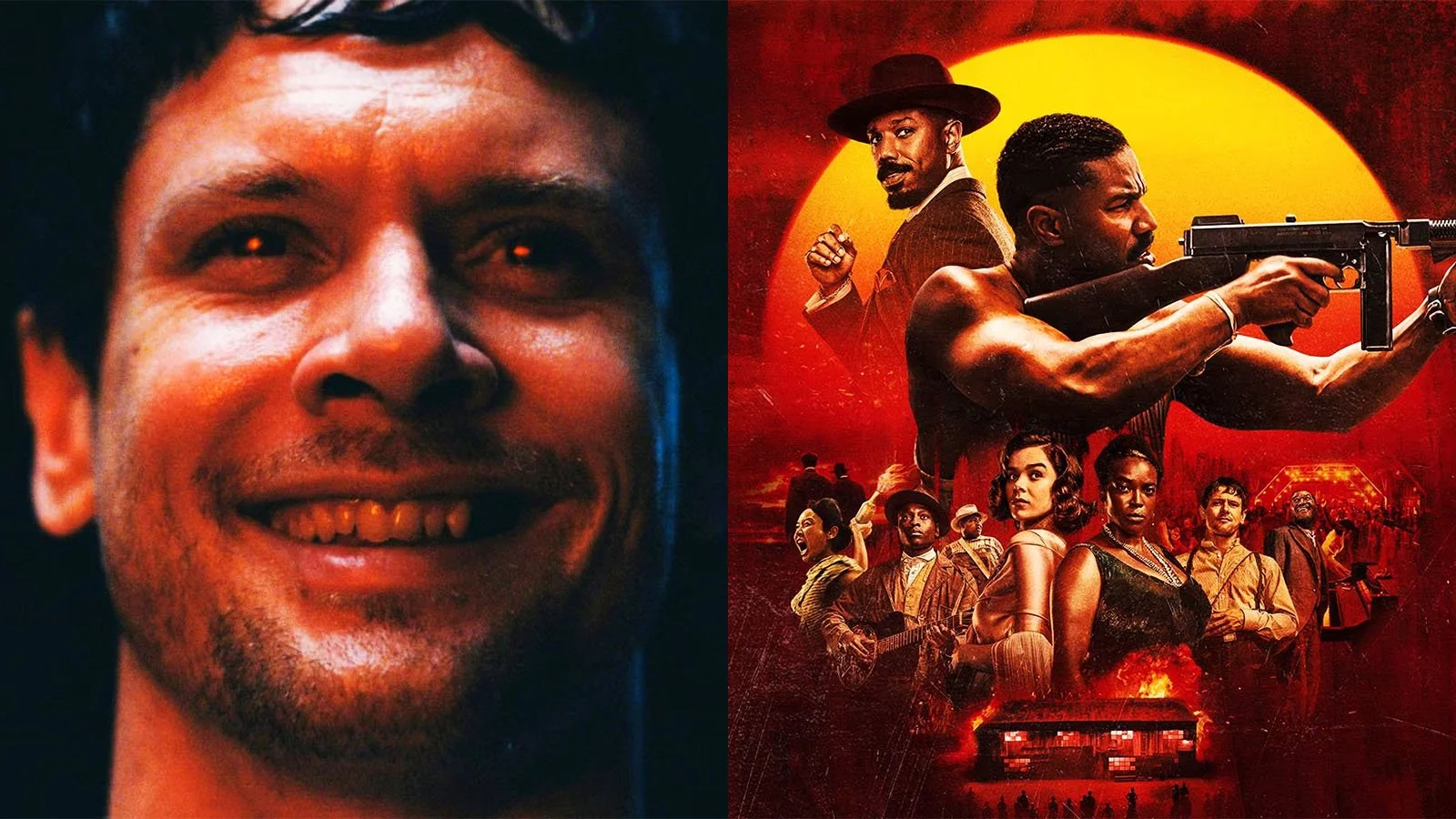
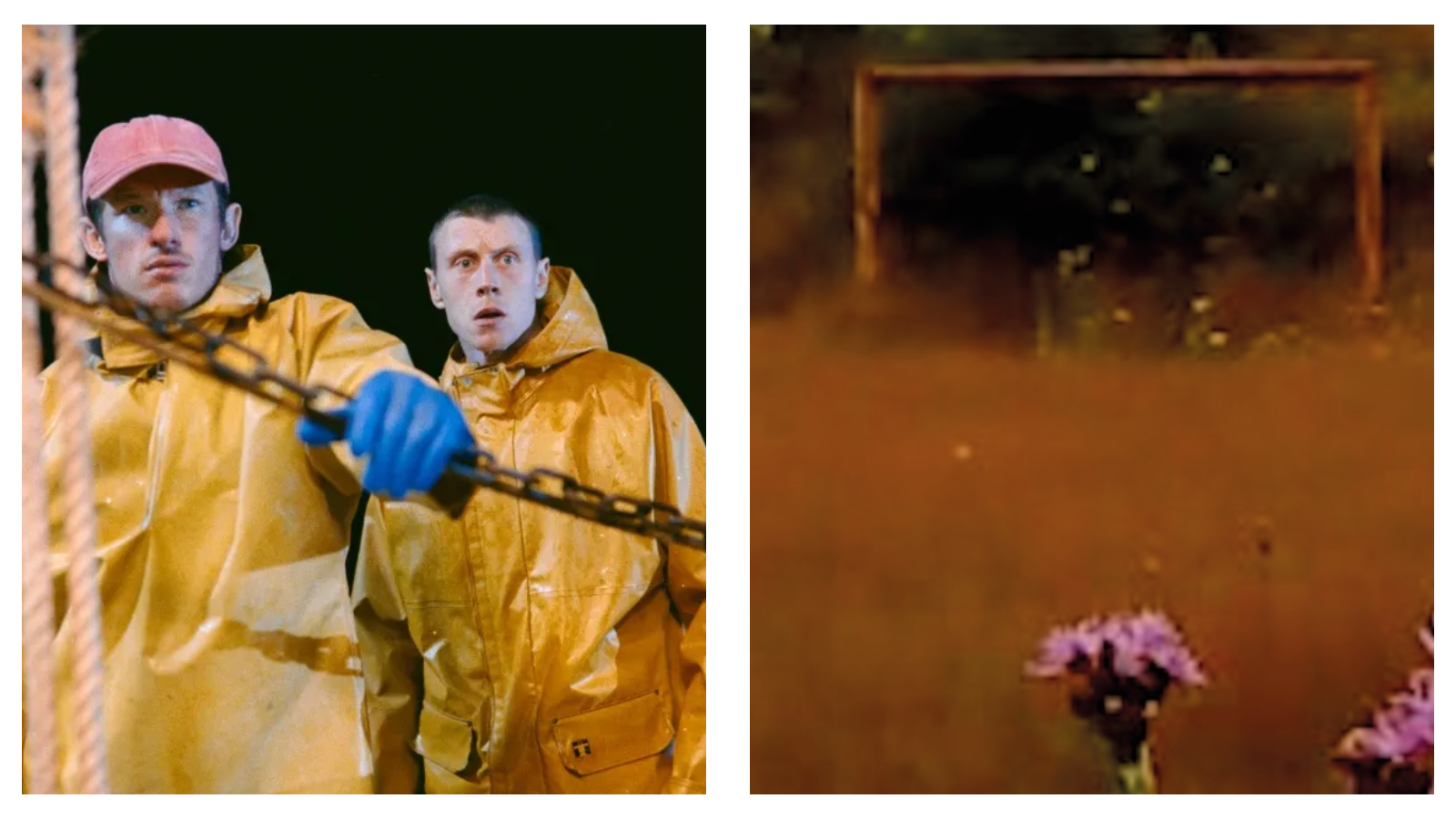
From Georgian filmmaker Alexandre Koberidze comes the experimental masterstroke that is Dry Leaf. From the still in the article thumbnail, some of you might be questioning the quality of the image, but there is, in fact, nothing inherently wrong with its resolution; its 144p nature is exactly as intended.
The film follows a father, Irakli, who is searching for her missing daughter, Lisa. Her last known details are that she had been photographing rural football stadiums in villages across Georgia. Accompanied by Lisa’s invisible best friend, the two set off across the country to find her.
At its core, I like to think of Dry Leaf as a polemic on the state of image-making in mainstream cinema. As I mentioned with Rose of Nevada, there is an odd compulsion with shooting on film nowadays, or worse, for filmmakers and cinematographers to make their images as smooth and textureless as possible, amidst this digital age.
Koberidze’s answer to this is to completely minimise our visual field, constructing images of unyielding digital grain, the likes of which I haven’t seen since Boyle’s 28 Days Later, but even still, this is far more formally extreme than that ever was.
Why is Hollywood so obsessed with tangible clarity in its cinematography? Maybe it’s part of this wave of anti-intellectualism that commercial cinema is dying to take advantage of.
Yes, Dry Leaf is a partial antithesis to the world of mainstream cinema, but there’s an odd sense of comfort to be found in its digitally restrained landscapes. Maybe the mystery is solved, but its final sense of clarity is ambiguous, channelling its sensory infatuations with nature, where resolution exists just outside of our feasible perspective.
READ NEXT – South Korean cinema: Four essential Films to get you started