The concept of franchising out a film is rightly met with discontent nowadays, but some sequels and prequels just get it right.
With so many unnecessary IP extensions, it’s hard to imagine a world that has such masterful examples of this instance, but they sure do exist.
Film News Blitz’s Oscar Trinick gives us his favourite cinematic successors and predecessors.
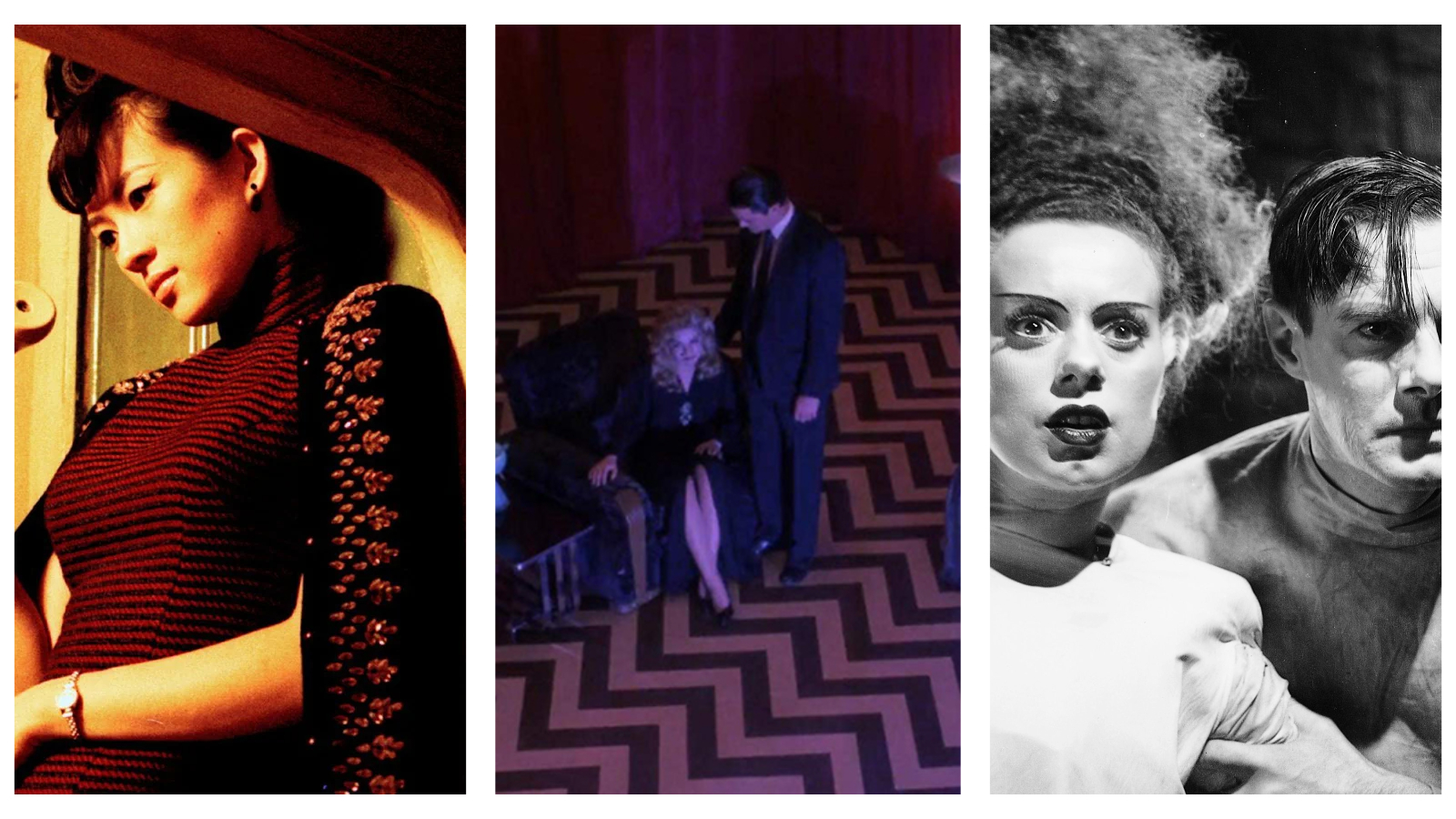
‘2046’
I think this Hong Kong masterpiece falls under the category of films that most people had no idea was a sequel to a beloved classic. In this case, this is director Wong Kar-Wai’s follow-up to his most popular hit, In the Mood for Love.
Following up on our male lead from the first film, Chow Wo-man, a sci-fi writer, played by the legendary Tony Leung, this film follows women entering and leaving his life over the course of a few years, after the woman he holds closest exits from his life.
I think it’s easy to see why people don’t associate these two films together. 2046 isn’t a direct story continuation that the term sequel has come to hold now. It features the same lead and one of the lead actresses briefly, but it is a stark departure from the one-to-one love story that the original part offers. Yet, in a way, that’s the kind of magic of it all.
A once more straightforward love story between two people, which is not a dig on In the Mood for Love, is turned into something outlined by continual shifts in narrative and relationship, all visualised by the the fictionalsied split between maximalist sci-fi and the perpetual sadness of its reality, in a manner that is far removed from its predecessor.
The film is built around the fact that it is almost its own thing, working as a fallout of true love falling apart. It’s Wong Kar-Wai, I’d expect nothing less.
‘Twin Peaks: Fire Walk With Me’
The late great David Lynch is a man who most cinephiles will be familiar with, and rightly so. You don’t make films like Mulholland Drive and Inland Empire for nothing.
Lynch’s only adventure into the world of cinematic successors and predecessors was with his 1992 prequel to his own show, Twin Peaks: Fire Walk With Me. The film charts the days leading up to the show’s beginning, as we take a visceral dive into the last days of Laura Palmer’s life, as her dark fate hangs over every frame of the film.
On initial reception, the film was torn apart at the Cannes Film Festival and then again by general audiences. People hated this contrast in tone to the original show because, for the first time, Twin Peaks was a David Lynch film through and through. Fast forward to the present, and the film has become a cult classic; perhaps the masterpiece of Lynch’s career.
It’s a film that is defined by not only its massive swing in risk and valourous sense of filmmaking, but by its balance of Lynch’s form across his career. It is able to blend the ambiguous dream-qualities that many of his other works mastered, and twist them into a depressing and awfully upsetting nightmare driven by the emotionality of sexual violence and subdued evil.
Fire Walk With Me feels visceral and raw, like nothing Lynch has ever made. The mask of fan anticipation slips and gives way to the dire reality of its world. There are no comedic undertones to its melodramatic ensemble anymore, just devastation. No wonder America hated it.
‘Bride of Frankenstein’
Under the guise of commerciality, horror sequels have in fact drastically changed over the years, so it almost feels fitting that the earliest case of such an instance is one of the best the medium has ever produced; James Whale’s 1935, black and white classic, Bride of Frankenstein.
At its heart, this film is driven by the passion of the early Universal monster pictures that have and never will be reproduced in an equal fashion. The effect of its imagination is built into the limitations of the medium at the time. The saying that ‘they don’t make them like they used to’ is built into the fabric of the timely technology and the standard way of going about their artistic endeavours at that given point in history.
The cinematic inception of such iconic names is something that will always be lessened on reproduction. Whale is able to capture the humorous and romantic chaos of its tonality in stunning black and white photography.
It feels both expressionistic, similar to earlier silent films, and like an initiation into the mainstream of American horror stories, and I don’t mean that in a hindering way. It’s able to push past contemporary markers and deliver an experience into the extended adaptation world of Shelly’s novel.
The film is anchored by the divine performances from both our leads, who are able to find a contrast between the exaggerated camp and the desperate humanity they want to find meaning within. This is THE horror sequel.
READ NEXT – 2026 Actor Awards: Catherine O’Hara achieves posthumous award, Seth Rogen gives touching speech