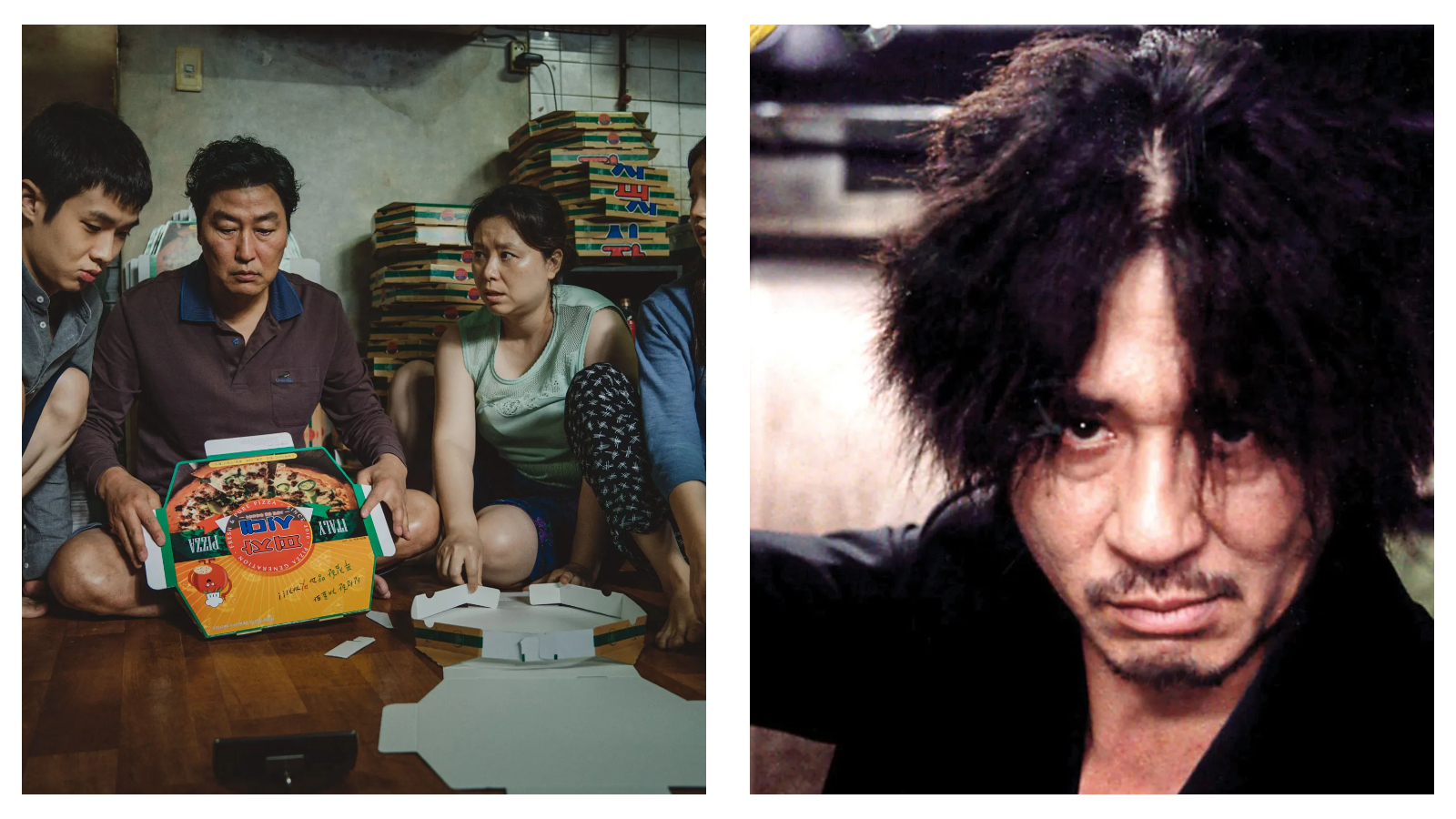
An often overlooked section of cinema, South Korea has brought forward some of the greatest cinematic experiences that have long evaded the mainstream.
With legendary director Park Chan-Wook’s No Other Choice being released in the UK at the end of January, its widespread critical acclaim has led to a Golden Globe nomination and a surge of attendance at independent cinemas.
Academy Awards, Silver Lions, Palme d’Ors and Cannes acclaim have followed South Korean cinema, with its most prominent success coming with 2019’s Parasite sweeping the Oscars.
Film News Blitz writer Freddie Thomas-Neher gives his four best flicks to get started with South Korean cinema.
‘Oldboy’ (2003) – A lurching masterpiece
Park Chan-Wook could fill a list on his own with essential films for a keen watcher to begin with.
The writer-director has been at the helm for an almost absurd amount of must-watch cinema, including The Handmaiden, a BAFTA winner, Decision to Leave, a Cannes winner, and the unofficial ‘Vengeance’ trilogy.
Oldboy is the second instalment of the Vengeance films (all of which have no correlation and are labelled a trilogy thematically) and is widely regarded as one of the best films of all time.
The film focuses on Oh Sun-dae (Choi Min-Sik), a man who is imprisoned in a room for 15 years for seemingly no apparent reason, with his unexpected release spanning a web of conspiracy, lies and one of cinema’s great twists.
The success of the film, itself based on a manga, saw an American remake directed by Spike Lee, starring Josh Brolin and Elizabeth Olsen, which can hardly lay a glove on Park’s original offering.
Oldboy won the Grand Prix at Cannes upon its release in 2003 and had its praise sung by auteur director and president of the jury, Quentin Tarantino, who reportedly (and unsuccessfully) started a campaign for the film to be awarded the Palme d’Or.
A fantastic starting point for anyone who wants to work through not just South Korean cinema, but Chan-Wook’s catalogue as a whole.
‘Memories of Murder’ (2003) – Stomach-churning realism
Director Bong Joon-Ho, who appears twice on this list, when asked about his intentions for the final shot of Memories of Murder, said that he wanted the murderer to see the film.
He did. 10 years after the film was released, which is based on the Hwaesong murders in the 1980s, advancements in DNA recognition allowed for Lee Chun-Jae to be convicted for the crimes depicted in this true story.
Joon-Ho, when asked about the conviction at the 2019 Beyond Fest in LA, chillingly offered his thoughts.
“When I made the film, I was very curious, and I also thought a lot about this murderer,” he said.
“I wondered what he looked like. I was able to see a photo of his face. And I think I need more time to really explain my emotions from that.”
The masterful approach to a then-unsolved case brings Memories of Murder a terrifying serenity, with many quiet, rural settings becoming the stages for intensely frightening scenes.
The abject desperation to catch the killer portrayed by lead actors Song Kang-ho (a common collaborator with Bong) and Kim Sang-Kyung, who portray the police detectives assigned to the case, brings a stark realism to the small-town horror that was endured by the victims.
Memories of Murder is a cult classic, a piece of history and a frightening insight into a disconcerting true story that is more than accessible to a first-time watcher.
‘Peppermint Candy’ (2000) – South Korea’s history in reverse
Arguably one of the most outstanding pieces of screenwriting ever, Peppermint Candy is a baffling, upsetting and existential tragedy that is impossible to be unaffecting.
Within the first five minutes of director Lee Chang-Dong’s sprawling tragedy, Kim Young-Ho (Sul Kyung-Gu) reunites with a group of long-forgotten friends, exhibits erratic behaviour and subsequently walks into an oncoming train.
His final words: ‘I want to go back’, haunt the next two hours, a life story set in reverse over 20 years with seven chapters depicting different key moments of Young-Ho’s life.
Military service, police work, a failed business and more lead into the harsh realities of life in South Korea in the late 20th century, running parallel to events in the country’s history, including the 1980 Gwangju massacre and the 1990s Asian financial crisis.
So closely wound to the bone of South Korean history, the title begins as an almost irrelevant passing comment, but the capitulation of Young-Ho’s life over such a long period of time gives meaning to each character originally left unexplained and often bereft in earlier chapters.
Watching a film in reverse seems an unnecessary, silly idea, but the emotional depth that Chang-Dong’s structure gives the film allows for the sad history of a man beaten down by the South Korean system to reflect upon the viewer with a harsh hindsight.
Language constraints will not permit the emotional weight of the film to falter; each individual strand of the story is beautifully tied together.
‘Parasite’ (2019) – Breaking into the mainstream
Bong Joon-Ho’s second inclusion, Parasite, is the justifiably clear choice for a first foray into South Korean cinema.
Breathtaking references to the biased class system, a twisted social hierarchy and a chilling ending allowed the film to successfully break into the mainstream with serious Western awards-based recognition.
The 2019 film saw Bong take home four Oscars at the 92nd Academy Awards ceremony, including Best Picture and Best Director, as well as being a Palme d’Or winner.
Widely argued as the greatest film of the 21st century (or at least one of them), Parasite details a desperate family living in the slums of Seoul who attempt to infiltrate a rich family at different points in their household.
Parasite is the highest-grossing South Korean film ever, at over $250 million, and is regarded as Bong’s magnum opus, with him also directing a major Hollywood film in Mickey 17 after its release.
Never the most conventional films, South Korea looks as if it may finally find its footing in the mainstream, with the past decade bringing forward more recognition for an underappreciated subsection of cinema.
READ NEXT – Film opinion: Why ‘Pitch Perfect’ is the ultimate comfort film