It seems that in our current landscapes, the documentary is for many just a fact study of nature or of war, but its true potency is often misrepresented.
There’s a much bigger documentary world out there to discover than just the soothing sound of David Attenborough’s voice or the banal WW2 Wikipedia reading.
Film News Blitz’s Oscar Trinick tells us why he thinks documentaries deserve better in the mainstream world.
The essence of fact
The problem that most people seem to stumble on is treating documentaries as an entirely separate art form from film, when both really exist inextricably, complementing and antithesising each other at the same time.
It’s a contradiction that exists at the heart of what makes cinema, trying to determine what you think is real and what you think isn’t.
Documentary filmmaking offers a bridge to a world where fact and truth can be two different ideas, where the camera becomes immortalised through perspective, yet so many never bother to peer inside.
Whilst a documentary, at its definitional core, is something non-fictional, some of cinema’s astounding works exist to play with the essence of fact, just as film constantly blends real events with fictional ones.
A lot of what makes a documentary a documentary isn’t actually that far from what makes a film, too.
At the end of the day, they’re all still films, but so many branches exist within each subsection.
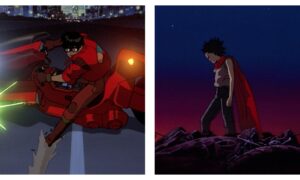
READ MORE: Anime film analysis: How ‘Akira’ still blows minds 38 years later
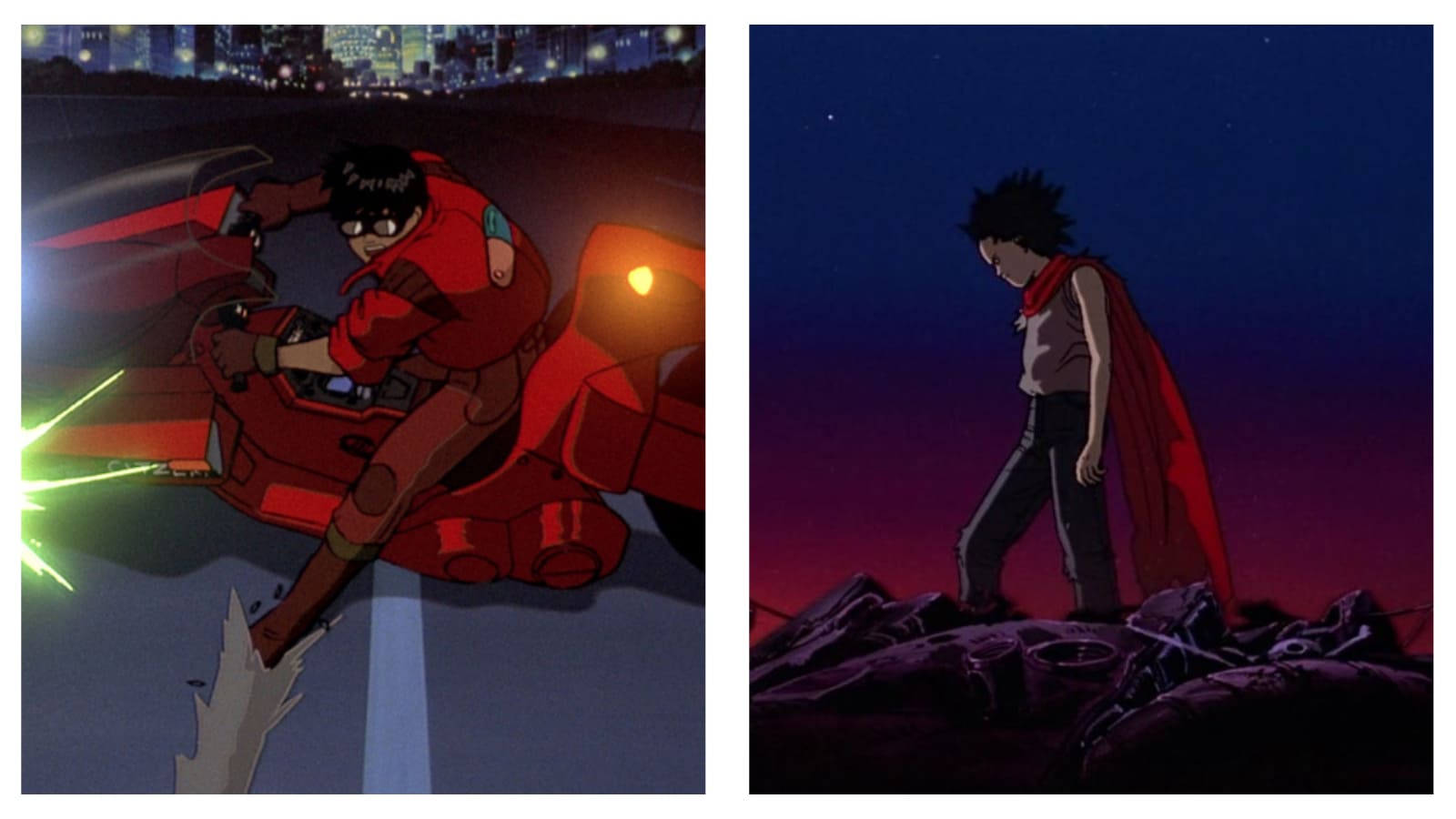
Akira
The best of the best
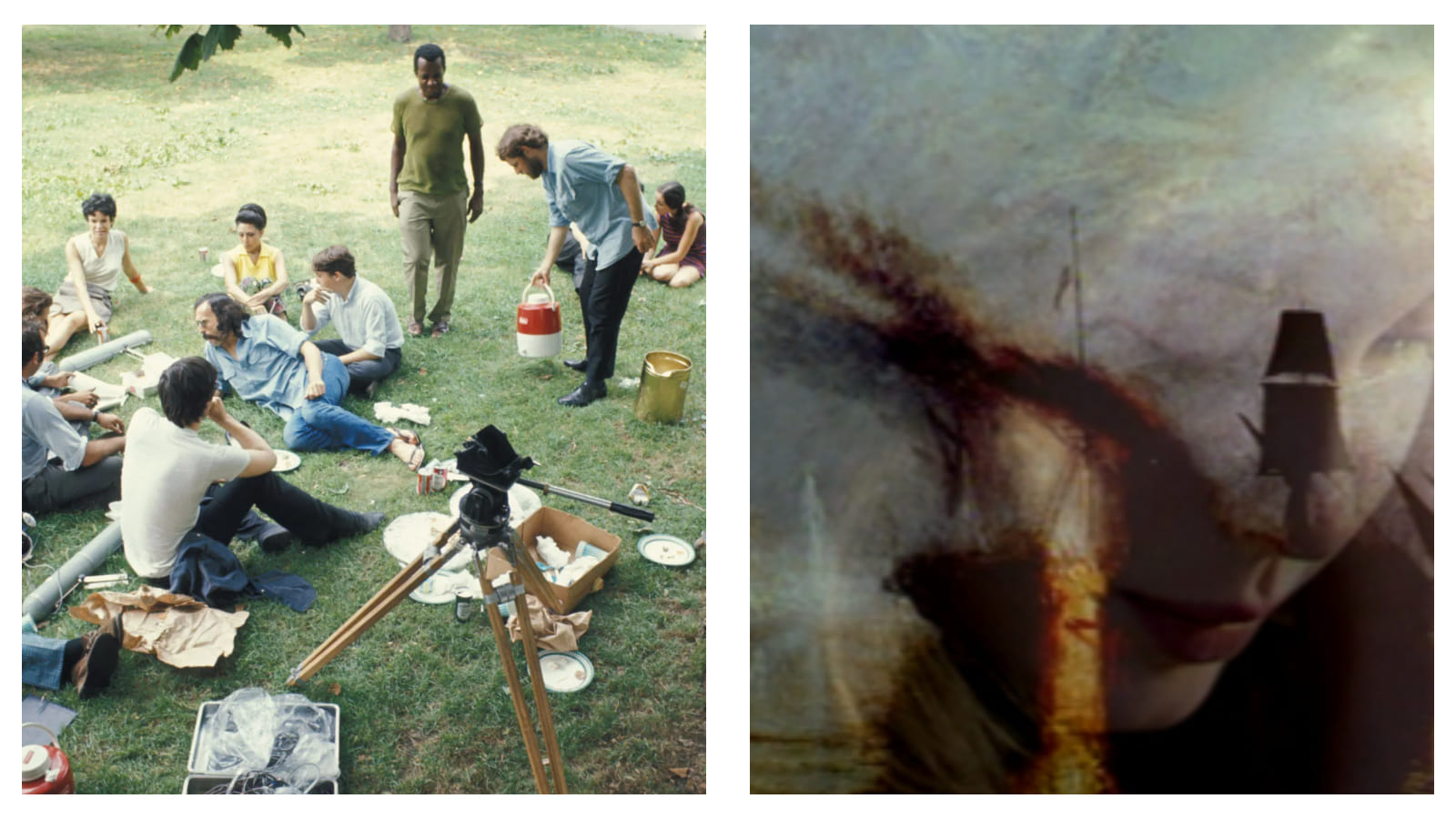
The world and potency of documentary filmmaking were fairly alien to me a year or so ago, but if one film completely changed that for me, it would be William Greaves’ 1968 experimental tongue-twister, Symbiopsychotaxiplasm: Take One – a film that perfectly represents the faux oddity of its title.
The film follows Greaves, a director who is conducting screen tests for a film with various pairs of actors filling in the roles.
On top of Greaves and his crew shooting the screen tests, another crew are there filming Greaves and his crew doing this, as a kind of behind-the-scenes gimmick, and at the same time, there is another crew filming that behind-the-scenes crew, and everything else going on.
Simply put, it is a documentary, inside of a documentary, inside of a documentary.
The spark of importance that came from within this film for me, though, is its characters’ ability to question their own reality of performance, as if Greaves has put this on as a play, both conforming to and breaking the definitional documentary mould.
Cameras watch people debating over whether they are having candid conversations, if the many points of view that we see through obstruct the certainty of truth and its non-fictional status.
I owe this film a lot in the way it shaped my current understanding and relationship with cinematic criticism; it acts as an endless, unanswered bridge between both worlds.
Yet at the same time, it almost speaks of a form without a bridge, but film as a single entity.
It offers such an interminable depth of observation and challenging perspectives that define the true vigour of the documentarian’s camera; for me, this is the perfect gateway into the importance of quote on quote, non-fiction filmmaking.
Timeless hits
Documentary filmmaking has been of major importance since cinema began, with Greaves’ masterpiece only the tip of the iceberg among experimental hits.
In 1922, Danish director Benjamin Christensen released Häxan, a silent film rooted in historical superstition and an essay/documentary-like approach to storytelling.
The film blends non-fictional accounts through dramatised sequences that are ripped straight from your darkest nightmares.
In 1929, Soviet documentarian Dziga Vertov released Man with a Movie Camera, in which a man wanders around with a film camera and documents urban life in a way that was distinct for its time, but also as a precursor for later cinematic voyeurism.
In a vein similar to that of Symbiopsychotaxiplasm, master Orson Welles delivered a cinematic magic trick with his documentary F for Fake, detailing the potency of editing.
In this, Welles combines fiction and non-fiction as he documents the lives of infamous fakers Elmyr de Hory and Clifford Irving, and the impact fraud has on other people’s lives.
In 1982, Godfrey Reggio released what is probably the staple example of what experimental documentary filmmaking is known for: Koyaanisqatsi.
An 85-minute, dialogue-free journey of the US, on the rise and fall of modern technology and its impact on the landscape and humans that inhabit it.
All scored over by one of the greatest film soundtracks from Phillip Glass.
In 1989, the late French auteur Jean-Luc Godard began work on Histoire(s) du cinéma, an eight-part documentary essay chronicling the history of cinema and its relation to the 20th-century journey.
It often feels redundant to say that there are films that every cinephile should see before they die, but this often acts as the magnum opus of such sayings, regardless of your feelings toward his work.
A legacy of non-fiction
Only a few months ago, we lost perhaps the most dedicated documentarian of our time, Frederick Wiseman.
His seven-decade spanning career saw him dive into the heart of institutions, with a perspective so remarkable that few were ever able to replicate it.
He was able to remain almost invisible when observing action and conversation, but, at the same time, his eye feels entirely palpable, as he can speak through examination and his forced perspective; the line of objectivity and subjectivity feels so tight that its naturality in emotion is unlike anything anyone else has been capable of.
In his films, such as High School, Welfare, Titicut Follies and City Hall, Wiseman was able to present revelation through the singular observation of his shots, paired with the sequencing of his editing, where truth is positioned in a way that tunes into the essence of forced perspective; we see what he sees.
It feels both entirely natural and guided just enough so that we feel the emotional hand of a filmmaker attempting to tap into an audience watching.
There will probably be no one else like him, ever.
21st-century gems
Whilst the 20th century paved the way for non-fiction filmmaking to shine, many people’s idea of documentary is different now; there are plenty of under-appreciated works still being produced in our time.
Some of my favourite contemporary works include Deborah Stratman’s 2002 short In Order Not to be Here, a film about the post-9/11 police surveillance and the inability to stay hidden in a world with cameras everywhere, even in total darkness.
Jia Zhangke’s 2008 24 City sees the Chinese auteur dive into this non-fiction/fiction hybrid as he conducts interviews surrounding factories in downtown Chengdu.
This decade alone has seen several outstanding documentaries released.
From Kahlil Joseph’s BLKNWS: Terms & Conditions, to Albert Serra’s bull fighting Afternoons of Solitude, to Zhou Tao’s detailing of the vast expanse of the Gobi desert in The Periphery of the Base, and Alexander Horwath’s essay Henry Fonda for President.
The point I’m trying to make is that there is a whole other world out there to explore that isn’t just the casual, repetitive stuff you see on iPlayer or Netflix; it’s about seeing a vastly divergent view of our planet through the lens of whoever dares to shoot it best.
Documentary filmmaking isn’t just about seeing something that is real; it’s about filmmakers distorting and being creative with what they can’t control.
Or, utilising what defines non-fiction in a way that plays on the concept of fact or truth.
The truth lies with whoever is pointing the camera in the right direction, which in itself can shift with ease.
READ NEXT: Film trailers: Once shelved ‘Coyote vs. Acme’ is finally on its way