Following the debut of The Lost Boys Musical on Broadway at the Palace Theatre, Film News Blitz’s Darshan Kaur Gill revisits the original 1987 film.
The Lost Boys is a 1987 original horror-comedy directed by Joel Schumacher, following two teenage brothers and their divorced mother who relocate to the fictional coastal Californian town, Santa Carla.
The screenplay, written by Jeffrey Boam, Janice Fischer and James Jeremias, was adapted from a story written by Fischer and Jeremias, originally intended as a horror-themed, Peter Pan-inspired story.
The cult classic stars Jason Patric as Michael and Corey Haim as his younger brother, Sam Emerson, following the pair as they become entangled in the town’s secret world of undead biker youth.
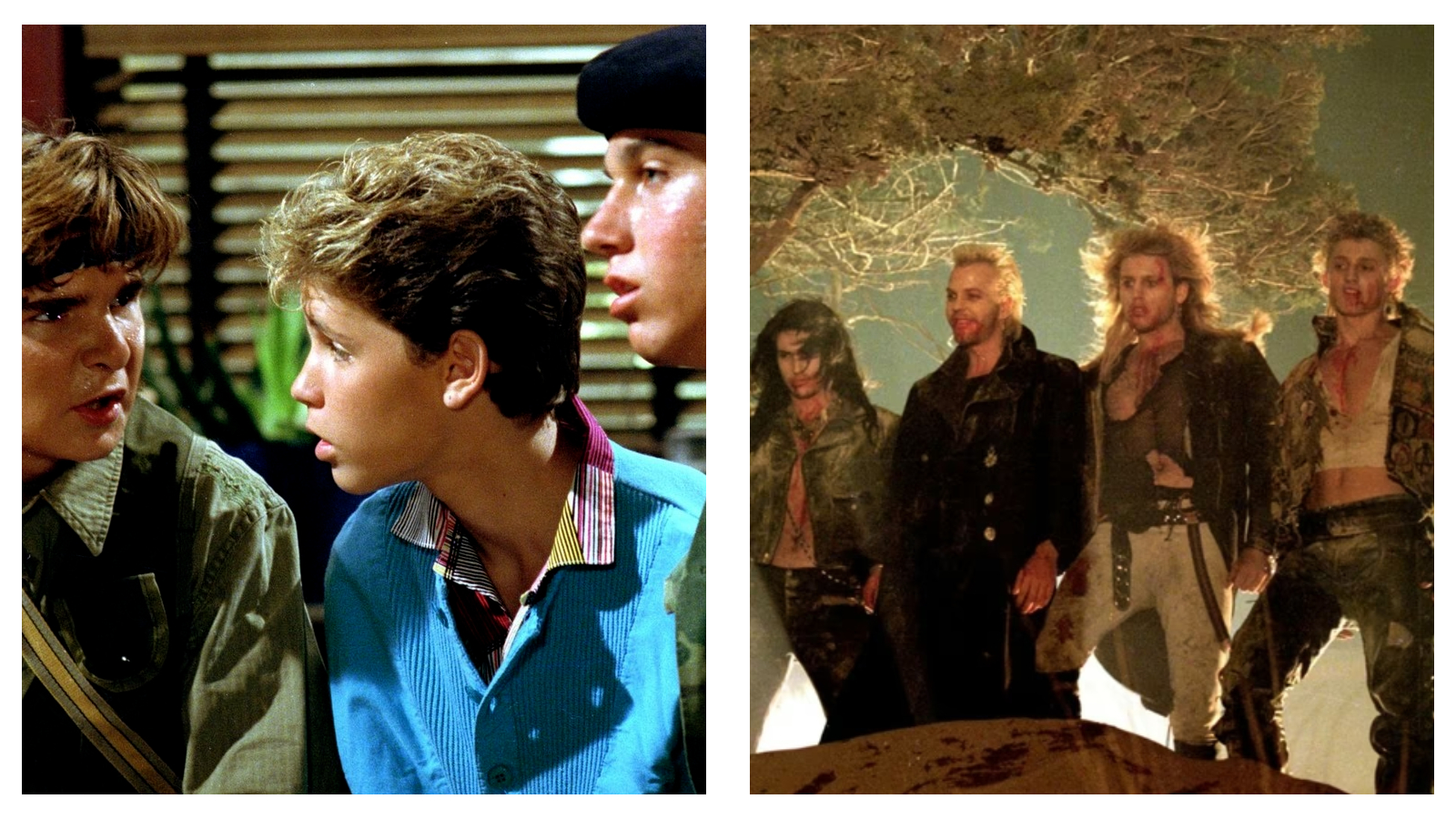
Patric’s character, Michael, is introduced to the vampires by his love interest, Star (Jami Gertz), and is tricked into becoming a vampire by gang leader, David (Kiefer Sutherland).
At the same time, Haim’s character Sam meets vampire hunters, the Frog brothers, played by Corey Feldman and Jamison Newlander.
Teen vampire genre
The film was one of the first teenage vampire movies, and led the charge in revitalising the genre.
Schumacher’s vision heavily influenced later vampirical works, including Joss Whedon’s Buffy the Vampire Slayer and the film series Twilight.
The first of its kind, The Lost Boys changed the way vampires were portrayed in popular media, no longer being seen as decaying, gothic, repulsive monsters and instead portraying vampires as young, punk-rock, teenage bad-boys.
Sutherland’s David can be seen as a direct inspiration for the character of Spike in Whedon’s Buffy the Vampire Slayer, down to the bleached-blond hair and the black leather jacket.
Similarly, Edward Cullen in Twilight can be seen to mirror Michael’s internal struggle between humanity and vampirism.
The Vampire Diaries is yet another example of how this one film changed the way vampires are characterised, as without the creation of the teen vampire genre, there would be no Damon and Stefan Salvatore, characters that mirror David and Michael, respectively.
Throughout the film, David is shown as without restraint, indulging in anything he wants, something mirrored in the character of Damon in The Vampire Diaries.
Inversely, however, Michael struggles against that same indulgence that comes so naturally to the other vampires, similarly to Stefan, who sets out to resist the bloodlust that comes so naturally to his brother Damon.
Soundtrack
The use of the soundtrack perfectly complements the film as it captures the spirit and mood of the film’s 1980s gloomy atmosphere.
Using a mix of pop, rock, and new wave tracks, the soundtrack enhances the film’s themes of rebellion, peer pressure, youth culture, and the supernatural.
Cry Little Sister by Gerard McMann was written as the theme for the film, and its use of a youth choir alongside the synth creates a haunting and tragic effect that also sounds almost hopeful when played in key parts of the movie.
The theme captures the underlying loneliness that is present in multiple characters throughout the film, particularly David and Michael and their longing for a place to belong.
Fashion
The styling of the vampires is yet another thing that has influenced the way that vampires are portrayed in popular culture.
The use of make-up and costume styling allowed the boys to resemble 1980s rock stars, with a mix of new and old in their styling, clearly presenting them as immortal and timeless beings.
The leather jackets and cowboy boots, alongside the motorcycles they use throughout the movie, emphasise the role of the characters as ‘bad-boys’ and outsiders, presenting them as dangerous but also attractive.
This contradiction between the vampire’s styling and the rest of the town’s residents further emphasises the characterisation of the vampires as outsiders, a key component of the teen vampire genre.
It’s one of many thematic and stylised choices that still resonate with audiences today.
READ NEXT – Should shows rush to replicate the cultural impact of ‘The Summer I Turned Pretty’?