Bottoms sits amongst the teen comedies genre where everything is supposed to feel a little over–the–top and unhinged.
The best teen comedies don’t just tell jokes, they create entire universes ruled by delusion, hormones and humiliation.
It’s this that sets Bottoms apart from its counterparts, writes Film News Blitz’s Darshan Kaur.
In an era where most high–school centred movies lean toward realism and nostalgia, Bottoms not only embraces complete chaos, but it results in one of the funniest and most memorable comedies of the last decade.
What makes ‘Bottoms’ stand out as a great teen comedy?
From the movie’s opening scenes, Bottoms establishes a world where reality defined by logic ceases to exist.
The football players are characterised as an absurd variation of celebrities, whilst also being established as unimportant.
Meanwhile, the main characters, Josie and PJ, are portrayed as melodramatic with a hint of unfounded confidence when they say the dumbest things possible.
Instead of grounding the narrative in realism, director Emma Seligman turns high school into a fever dream, a social nightmare, using different characters to emphasise how weird the entire scenario is.
The thing that makes the film so funny is that this over–the–top, ridiculous world that Seligman has built is taken completely seriously by every character; there isn’t a hint that any of the characters would ever believe that the actions taken aren’t serious or necessary, a commitment that the actors don’t stray from.
Exaggerated violence only adds to what makes the film so great, with it appearing randomly and being treated like a minor inconvenience rather than holding the significance it would in reality.
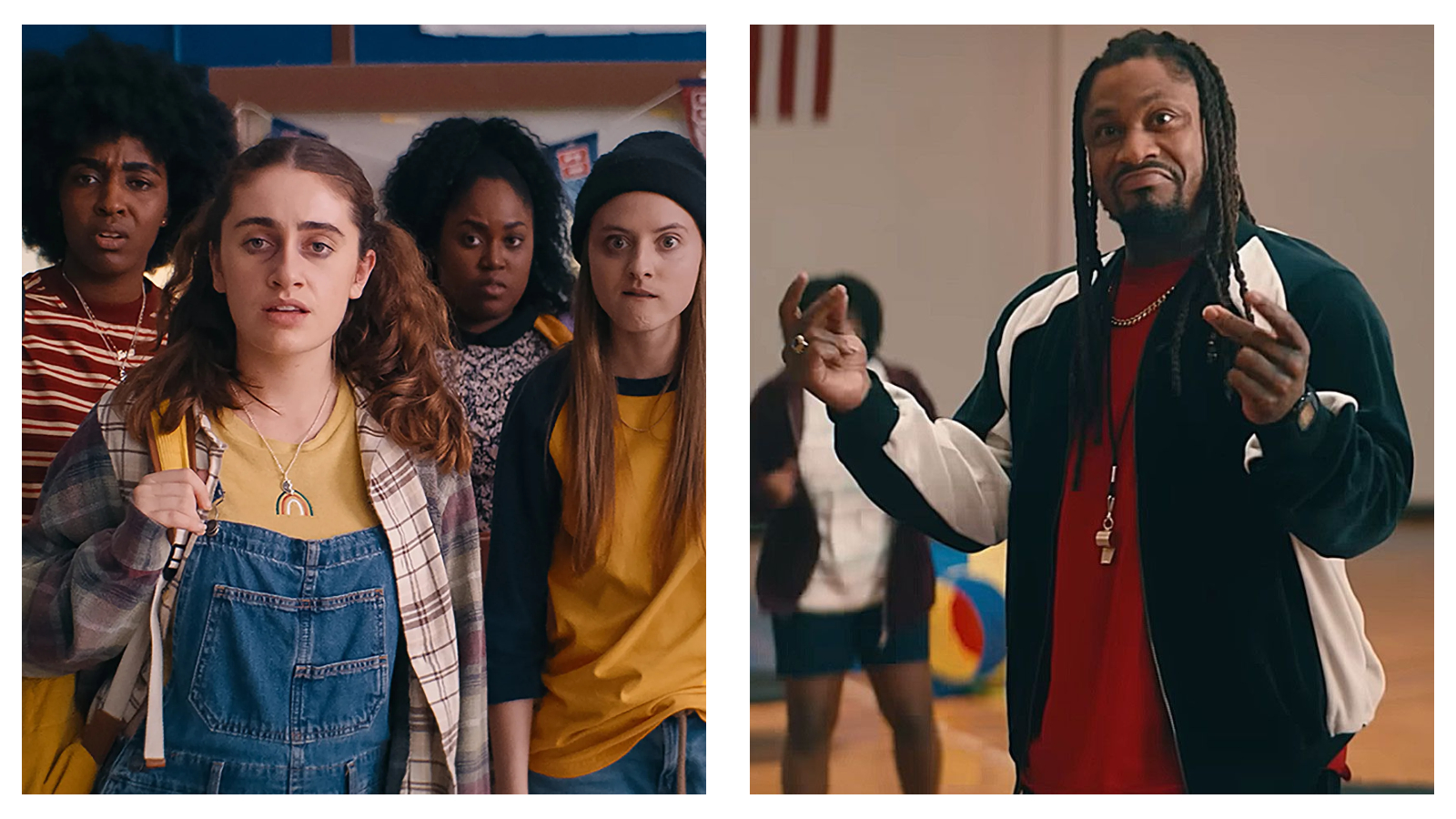
Main characters, PJ (Rachel Sennott) and Josie (Ayo Edebiri), work together to start a fight club within the school, expressing their desire to do so with their principal, yet another example of the ridiculousness of the film.
The pair work well together with Sennott’s PJ constantly on the verge of self–destruction with her outgoing personality, whilst Edebiri’s Josie gives off a quieter awkwardness that makes every interaction feel painfully relatable.
It’s this chemistry being the film’s leads that makes even the throwaway lines feel memorable.
Further, Nicholas Galitzine’s portrayal of Jeff just adds to the overall humorous tone of the film, with the ludicrousness of the character’s behaviour being so beyond reality that the audience cannot help but laugh at him every time he appears on screen.
‘Bottoms’ is a teen comedy portraying masculinity in a whole new way
Unlike other movies like Superbad and American Pie, Bottoms uses masculinity in an entirely different way, portraying the high school athletes as nothing short of ridiculous, with the personality of unstable cartoon characters.
Rather than the traditional portrayal of jocks as intimidating symbols of popularity, the football players are shown as overly emotional and strangely fragile.
This is particularly the case with Jeff, with every piece of dialogue he acts out coming across like it’s been rehearsed continuously in the mirror until the tone matches the situation perfectly.
It’s this ridiculousness that lends itself to the film’s larger comedic style, treating teenage emotions as catastrophically oversized.
A central premise where two lesbian high schoolers set up a fight club to help lose their virginity adds an extra layer of originality, too.
Bottoms has queer characters at the forefront of the movie, but doesn’t treat them as inspirational symbols or token characters.
Instead, the lesbian protagonists get to display the same reckless comedic freedom that was historically reserved solely for straight male protagonists, allowing the characters a chance to be messy, selfish, horny, insecure and deeply embarrassing without the tokenisation after it.
The humour feels fresh rather than sanitised, with every side character feeling exaggerated in a specific, memorable way, only adding to the movie’s chaos.
The fact that the plot becomes increasingly more ridiculous only adds to the film’s appeal, becoming part of its identity.
The film’s commitment to the bit is likely why it resonated so strongly with audiences, and allows for debates about the film’s characterisation as the funniest teen comedy in the last decade.
The film doesn’t ever go too far and attempt to reel itself back in, but rather, suggests that nothing is too much or too far, allowing room for the absurdity to take place unapologetically.
Bottoms is available to watch on MGM+ or Mubi.
READ NEXT – Film & TV opinion: Are sports romances the new dystopian cinema?