The best animated family movies contain hidden meanings which translate from childhood to adulthood.
Growing up is realising that Disney and Pixar were teaching moral values and fundamental truths of the world.
As kids, we watch films and fall in love with the bright colours and bold characters. But as adults? We look for life lessons underneath those very same movies we watched as children.
Film News Blitz’s Madi Chantry lists three films with overviews and their hidden meanings:
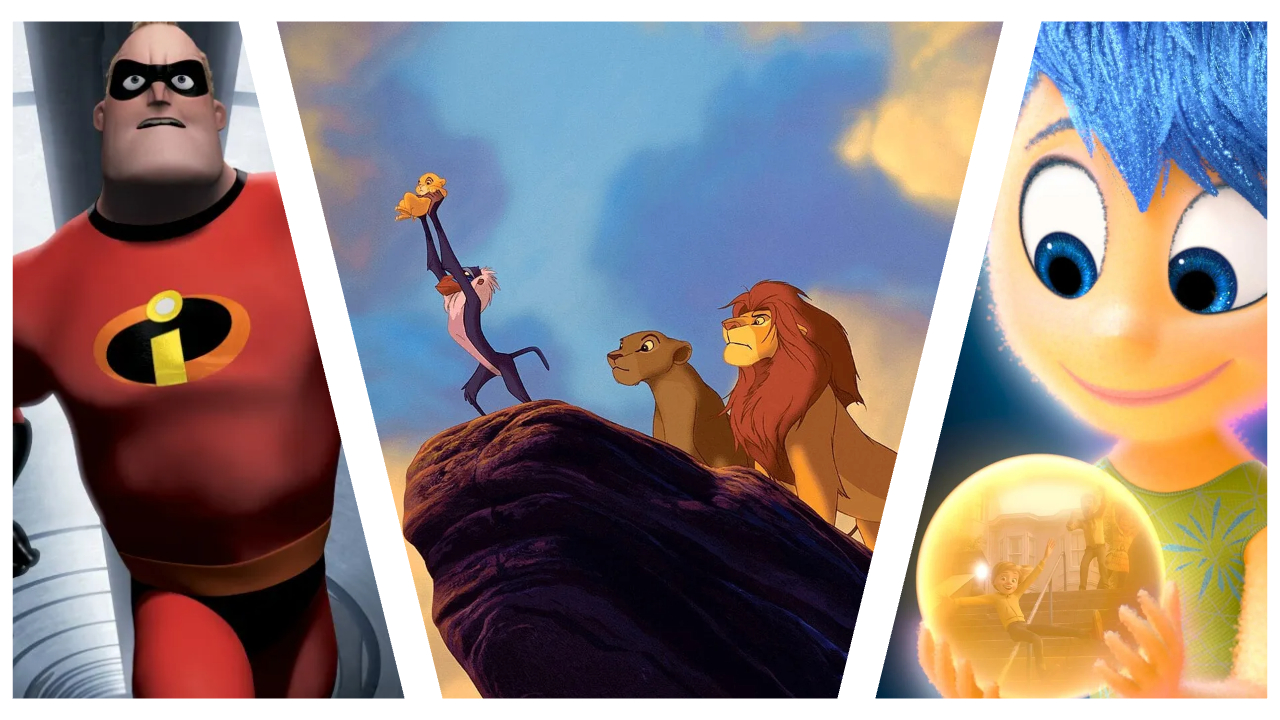
‘The Lion King’ (1994)
Synopsis
The Lion King follows Simba (Matthew Broderick), exiled from the Pride Lands as a cub due to his uncle Scar’s (Jeremy Irons) murder of King Mufasa (James Earl Jones) and Simba’s subsequent deception.
Simba grows up with Timon (Nathan Lane) and Pumbaa (Ernie Sabella), learning the ‘Hukana Matata’ philosophy.
Years later, his friend Nala (Moira Kelly) reunites with him and urges him to return home.
Simba encounters Rafiki (Robert Guillaume), who advises him to confront his past.
Reflecting on his life, Rafiki says, “The past can hurt, but you can either run from it or learn from it.”
Determined to reclaim his home and rightful place as king, Simba returns to the Pride Lands to confront Scar.
Hidden meanings
The Lion King focuses on identity, responsibility, and the “Circle of Life.”
Deeper than that, it’s about finding acceptance, overcoming past trauma, and taking on the weight of overseeing the animal kingdom.
There is a motif of unity and interconnectedness throughout the film surrounding the legacies that are passed down generation after generation.
The movie also portrays good vs. bad in terms of leadership. Scar is reckless, evil, and selfish. Mufasa and Simba keep the balance in the kingdom by using their knowledge.
Those themes are timeless and can be traced back as far as William Shakespeare’s Hamlet, an inspirational source text for The Lion King.
‘The Incredibles’ (2004)
Synopsis
The Incredibles showcases a family of superheroes who were forced into an undercover, civilian lifestyle by the government.
Bob Parr (Craig T. Nelson), who is secretly Mr Incredible, yearns for his glory days when he could be a hero, so he takes on a secret mission, hiding it from his family.
Mr Incredible is then captured by a fan-turned-villain, Syndrome (Jason Lee), and his wife, Helen (Holly Hunter), who is also Elastigirl, comes to rescue him.
Their children, Violet (Sarah Vowell) and Dash (Spencer Fox), follow along, helping to save their dad from Syndrome.
Hidden meanings
The Incredibles is more than just a film about superheroes saving the world. It’s about embracing individuality, rejecting societal pressures, and coming together as a team.
When Helen tells Dash that they need to fit in with society and that everyone is special, he responds with: “Which is another way of saying no one is.”
This symbolises that being special comes from being different from the norm.
‘Inside Out’ (2015)
Synopsis
11-year-old Riley (Kaitlyn Dias) and her five personified emotions (Joy, Sadness, Fear, Anger and Disgust) face discomfort when her family moves from Minnesota to San Francisco.
Accidentally sucked out of Headquarters, Joy and Sadness race to return. During their journey, they meet Bing Bong (Richard Kind), Riley’s made-up childhood friend.
Towards the end, Joy discovers that accepting sadness is essential for Riley’s growth.
Hidden meanings
The movie emphasises the importance of emotional complexity and shows that Sadness is essential for psychological growth.
It presents the view that there is this pressure of maintaining constant happiness, and memories are a blend of core emotions, like Joy and Sadness.
Inside Out also looks at the need to embrace letting go of childhood innocence to grow and develop.
READ NEXT – ‘Zootropolis 2’ review – A strong follow-up to a modern Disney animated classic