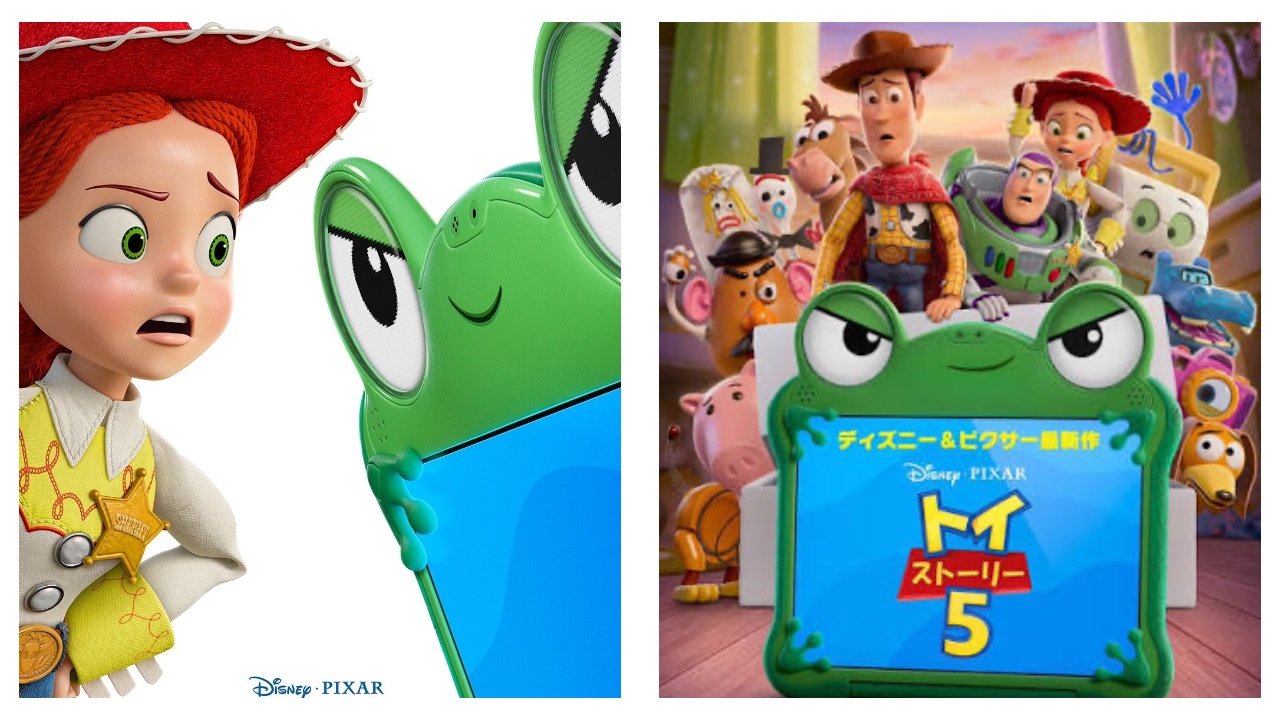
Have you ever compared film posters from around the world?
There are usually some interesting changes between them.
The Japanese versions are a great example, especially for the recently released Toy Story 5.
These changes reflect the uniqueness of the film industry in Japan, writes Film News Blitz’s Moe Ikeda.
Japan’s ‘Toy Story 5’ poster
Toy Story 5 is Pixar’s latest movie released this year and spotlights the cowgirl character, Jessie.
While there are many versions of film posters used in the promotion for Toy Story 5, the main poster version shows her standing centrally behind the Lilypad tablet, the fifth film’s antagonist.
However, the Japanese version is different.
Compared to the other 12 versions, the Japanese poster is the only one in which Jessie is not standing in the centre, but rather behind Buzz and Woody.
Going back to ‘Toy Story 3’
Like Toy Story 5, Japan’s main poster for Toy Story 3 was different from other countries.
There is a precedent case in which the leading character is not in the centre.
Even though Buzz Lightyear was the lead in the film, the biggest, most central character in the poster was swapped out to be Woody.
Some people online analysed the change and attributed the reason to the fact that Japanese audiences want to see what they want to see, or what they would expect from a film.
The ‘Moana’ poster in Japan
The Japanese poster for Disney’s Moana film experienced similar changes to its main character.
In other posters, Moana is portrayed as a woman who has strength and power to control the sea.
She seems to be a brave, warrior-like person, which matches the movie’s storyline.
However, on the Japanese poster, she is portrayed more like her princess persona, whose femininity is highlighted through a softer pose.
Why posters are changed
Usually, when a country imports a movie from other countries, only the title on the film poster is changed.
However, Japanese film distribution companies tend to change everything about the posters, such as design, title, and catchcopy.
Japanese posters have too much information and sentences that do not seem simple. Sometimes, people criticise the posters as not being relevant and attractive.
Because of inflation and the popularity of streaming services, more than 50% of Japanese people did not go to the cinema in one year, according to the Film Producers Association of Japan.
Internet users explained this, saying that Japanese people like to get as much information as possible when they decide to go to the cinema because it is expensive for them.
However, others also say they favour information they expect to receive from a film.
These reasons are why film distribution companies change posters; they want to make it attractive to the regional audiences and convince them to watch the films.
What can we learn from these poster changes?
By comparing posters around the world, you start to notice different countries’ uniqueness and cultural preferences from the alterations to designs, characters and words on posters.
Next time you decide to go to the cinema, perhaps you should pay closer attention to the posters – both the ones you’re seeing and the ones from around the world.
READ NEXT – Film nostalgia: The comfort of childhood films