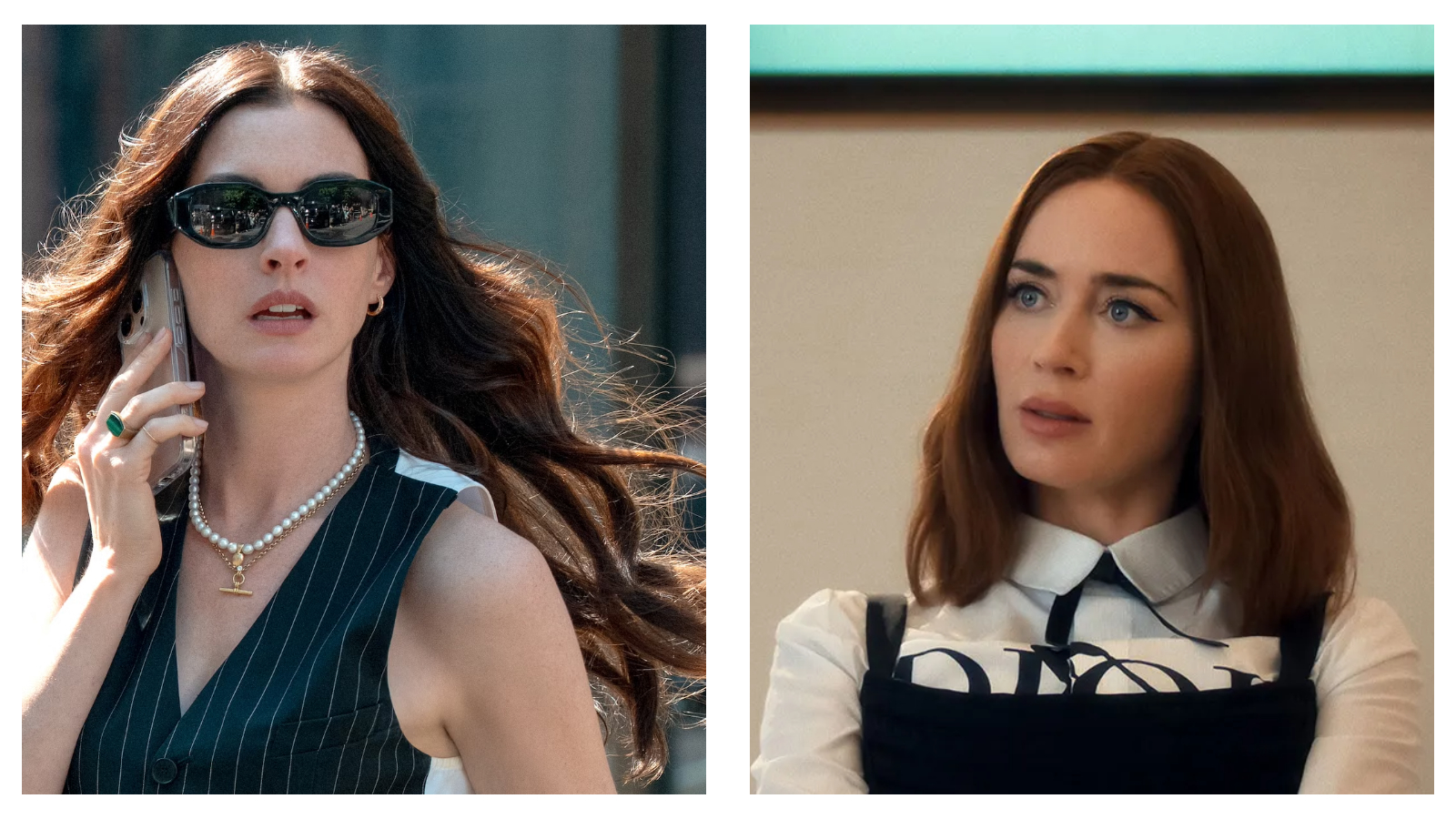
The Devil Wears Prada 2 is a glossy sequel that understands journalism is fighting to be heard.
Rating: ★★★★
In 2006, The Devil Wears Prada arrived before the iPhone, before TikTok trends, before AI threatened to stab creative industries with its devil horns, writes Film News Blitz’s Francesca O’Callaghan.
Back then, Miranda Priestly, played by Meryl Streep, withering “That’s all” represented a particular kind of cultural influence: elitist, expertly arranged but crucially human.
Nearly 20 years later, The Devil Wears Prada 2 returns to a world in which magazines are shrinking and everyone, everywhere, is a brand.
Anne Hathaway’s Andy Sachs re-enters the Runway universe as features editor after being laid off from a prestigious broadsheet, only to discover that the magazine no longer resembles the lavish establishment she once fled.
Budgets have vanished.
Scrutiny hangs over fashion’s sweatshops.
Social media has shattered taste into endless short-lived trends administered by teenagers with ring lights and makeup stations.
Familiar themes and returning creatives elevate ‘The Devil Wears Prada 2’
Director David Frankel and screenwriter Aline McKenna’s return proves essential to maintaining the nostalgic wit and emotional depth of the original rather than just simply reproducing shot by shot and line by line, like many other sequels.
One particularly effective sequence mirrors the first film’s famous makeup montage: Andy walks through New York to the slow build of Dua Lipa’s End of an Era, the camera cutting between sharp medium shots and brisk city pans exactly as it once did in 2006.
Only now she walks with confidence.
The girl who once begged for Miranda’s approval has become fluent in the language of ambition.
The original film resonated because it allowed female characters to love work, a societal commentary on what it’s like for women in a patriarchal society.
As Streep observed during a BBC interview promoting the movie, the notion that ambition in women continues to be perceived as unattractive is “alive and kicking” decades later.
“Stories about women who love what they do and who work at it, who prioritise it. They’re few and far between in Hollywood,” Hathaway added.
Gone are Miranda’s pursed lips and glacial pauses that once made audiences feel as though they themselves were being scorned upon.
Here, she occasionally feels almost approachable, which is perhaps the film’s greatest loss.
Emily Charlton, played by Emily Blunt, expresses her usual sharp-tongued, competitive charm with outrageous style, now as an executive at Dior.
“She has moved with the times, evolved, and she understands where her bread is buttered. She knows where the money is”, said Blunt
Stanley Tucci’s Nigel remains wonderfully weary and emotionally repressed beneath immaculate tailoring.
The film also features a lot of star cameos, from the likes of Lady Gaga, Donatella Versace, Marc Jacobs, and Amelia Dimoldenberg.
Typically, star cameos take away the true meaning and messaging of films, and the audience is constantly seeking famous faces in the crowd rather than focusing on what’s right in front of them.
Surprisingly, the cameos in the sequel blend well with the fashion-oriented plot without taking up too much space.
In recent interviews, the cast have touched upon the need to preserve the human side of storytelling, enabling the audience to dive into the world and understand the realities facing journalists and society in this new digital age.
Beneath the handbags and glitz and glamour, that becomes the sequel’s thesis.
READ NEXT – Film opinion: Eight must-watch films of 2026