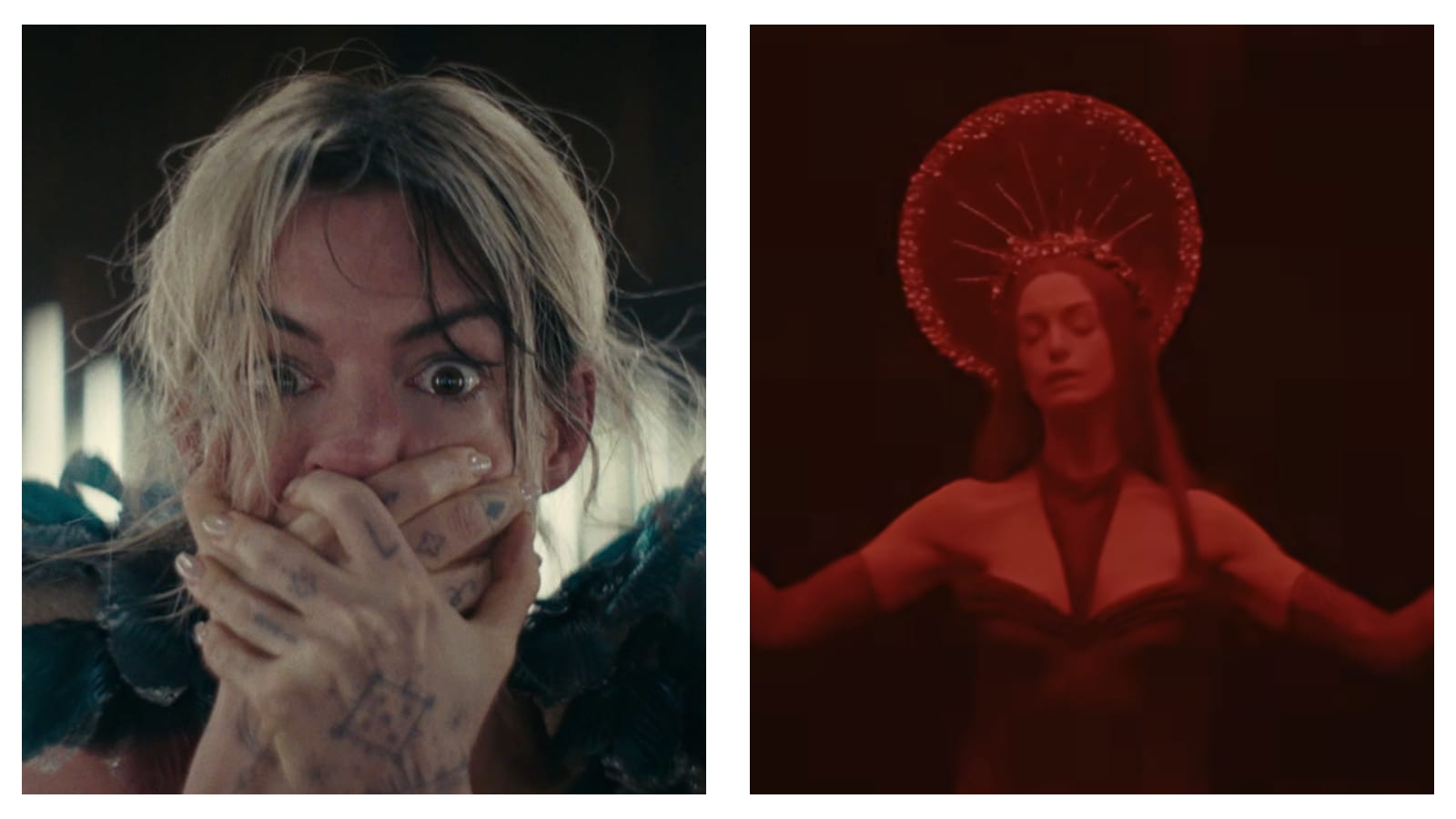
The fictional pop star genre has its newest entry with Mother Mary, a film that turns its oddities into a positive function.
Between this and The Devil Wears Prada 2, Anne Hathaway seems to be on top of the world right now.
Film News Blitz’s Oscar Trinick gives us his thoughts on this peculiar film.
Core details
Mother Mary is a fictional pop star who reunites with her former costume designer, as they resurface past traumas on the eve of her comeback performance.
Mary had what appeared to be an accident at her own concert, leaving her with scars, but all is not as it seems.
The all-female cast stars Anne Hathaway (Interstellar, The Dark Knight Rises), Michaela Coel (Black Panther: Wakanda Forever, Black Mirror) and Hunter Schafer (Euphoria, Kinds of Kindness).
FKA twigs (Honey Boy, The Crow), Kaia Gerber (Bottoms, Saturday Night) and Alba Baptista (Borderline) take up some smaller roles in the film as well.
David Lowery (The Green Knight, A Ghost Story) wrote and directed the film.
Contemporary melodrama
At its core, Mother Mary is a film that is quite smug in its self-awareness of why it is a melodrama – I don’t mean this in a bad way, either.
Its silly, and overly metaphorical nature is something made aware of by Michaela Coel’s character, Sam, the fashion designer, as she often makes anecdotes about her past in connection with her work.
The film lives by its stiff nature, never waning from its most peculiar ghost story, and an obsession with making you realise that its odd, melodramatic recounts of the past, and performances are all for a strange bit.
Melodramas are often rejected by contemporary audiences, with the off-key nature of their performances difficult to latch onto, but Mother Mary is a film so dedicated to its one-note vision that its pop fashion trance becomes quite captivating, rather than totally off-putting.
READ MORE: ‘Bait’ review: Riz Ahmed’s incredible exploration of identity
Single location
I found that most of my expectations of what I thought this film was going to be were actually subverted by the time the credits came to a close.
For one, the film takes place nearly entirely inside the confines of Sam’s barn, where she makes her dresses, as Mother Mary and herself recount their past trauma in flashbacks, serving as the only form of visual escape from that place.
They tussle back and forth about why Mary left Sam, and why she is only now coming back, both trading stories of a ghost.
Whilst the staging of Lowery’s single location setting often misuses its sense of confined space, particularly in its compositions of the concert flashbacks, there are some notable sequences of retrospect that hold a greater sense of strength than others.
FKA twigs stars in a seance sequence that feels right at home in this film’s strange ways, not because of its content per se, but because of Lowery’s ability to be content with how its positive stupidity in logic is continually lived by in most sequences.
The film functions at its best when it’s removed from its play-like environment and imagery, making that sequence I just talked about a highlight.
Emotional catharsis
David Lowery’s obvious, and self-referential, layup of metaphorical commentary on how art is an act of emotional exorcism and catharsis is not the highlight of the film.
I think even he knows such a plain-sailing concept doesn’t have a lot to offer here, because it really doesn’t.
Anne Hathaway, however, playing an endlessly silly rendition of Lady Gaga, who appears to coast on the unusual vibes of melodrama endlessly, with the climax offering little cohesion, is something that I found myself getting on board with in ways I usually wouldn’t anticipate.
We reach a point where Lowery’s stiff commentary has juiced all the minimal limits it can say, and the bizarreness of everything trying to support it takes over.
Most of what I’m speaking of seems antithetical, but its charm exists in its obvious flaws, perhaps more in its 112-minute dedication to them.
Riveting in all the ways I wouldn’t expect.
READ NEXT: Romcom revival: Romantic comedies are back!