The film industry has historically boasted its inventions, such as the filming of moving images, the recording of sound and computer-generated imagery.
In recent years, AI in film has become a hotly debated topic, with major Oscar-winning films even having used AI tools throughout their production.
But what happens when a technological advancement threatens the very jobs of those who have kept the entertainment business afloat for more than a century?
The introduction of AI in the film industry has divided tech-utopians, practitioners and fans into two distinctive camps.
But does the subject demand much more nuance than what is currently offered?
Film News Blitz writer Arwen Lehmann unpacks the debate.
AI: A tool for independent filmmakers
The film industry has historically, and especially presently, been extremely exclusive and costly for young, upcoming filmmakers who want to be the next great creative minds of their generation.
These filmmakers simply cannot compete with the level of access and resources that the likes of Christopher Nolan, Quentin Tarantino or Steven Spielberg have.
Therefore, the integration of AI tools into film production to help with tedious and time-consuming tasks such as storyboarding and visual effects can eliminate the need for renting big studios.
Rather, small teams of specialised creatives can work in tandem to use their limited time and resources more efficiently, thus cutting expenses which could financially suffocate independent projects.
Such AI tools can then be understood as helping remove barriers of entry into the film industry, allowing for diversification in creative voices represented on screen.
AI: A threat to the film industry
As utopian as tech entrepreneurs want to make AI appear, we cannot ignore its glaring implications on the film industry at large.
Los Angeles County, the mecca for creatives looking to make a break in Hollywood, has experienced a 25% reduction in the creative industry workforce over the last three years.
Companies such as Amazon, Disney and Apple have embraced this technological innovation by listing job vacancies for machine learning in their entertainment divisions.
Occupations such as visual effects artists, animators or post-production technicians might be rendered obsolete in the coming years and replaced by machines.
Other than significant job losses, ethical considerations such as the mass extraction of human-created art make many believe that AI is a fundamentally plagiaristic system.
With these facts to consider, can there be any way of incorporating the ever-expanding AI usage in film that doesn’t leave the industry in the hands of the tech elite?
AI: Appropriate implementation
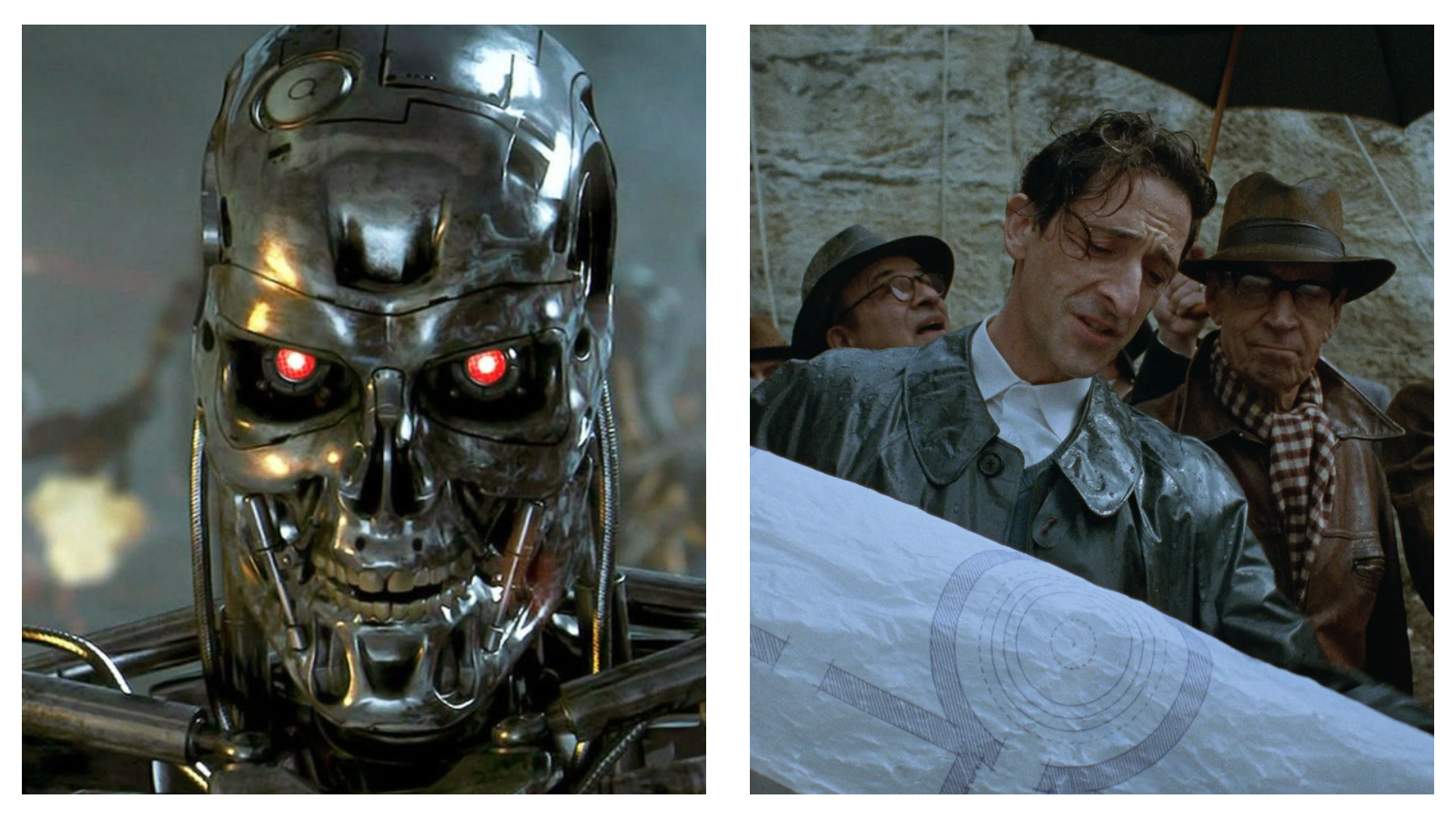
Adrien Brody won the Best Actor Oscar in 2025 for his leading performance as László Tóth, a Hungarian architect, in The Brutalist.
However, backlash ensued when it was revealed that the editor consulted AI to augment Brody’s speech within the film.
Brody had trouble mastering the Hungarian dialect for the film and needed his dialogue digitally altered to make it sound more seamless.
The editor admitted that he only used the AI tools as he “didn’t have the money or the time to shoot” the sequence, as per an interview with Variety.
This raises questions about whether AI can be used effectively and ethically without creating more unemployment.
What is the difference between traditional and generative AI?
Film practitioners, at least those who stress ethical usage, make it clear that they use AI tools that are more consistent with traditional post-production techniques.
Traditional AI systems perform rule-specific tasks and only interact with data that is given to it to analyse.
Avatar and Titanic director James Cameron has emphasised that he uses AI to speed up the laborious process of visual effects and that it has expedited film production.
Cameron is, however, staunchly against generative AI that is more specifically used to create new data through extractive measures.
“We don’t replace actors,” Cameron said to Variety.
What Cameron illuminates here is worthy to explore. The sentiment he expresses is that humans must still be deeply involved with and in charge of the creative process.
What is the way forward?
A University of Denver Professor wrote in a The Conversation article that the humans who control these AI systems are the ones we must be wary of, as they dictate how we use and interact with these models.
So, if more regulation of AI usage within the film industry can be implemented, what would that look like?
In terms of employment, we have seen a shift towards job creation that involves the operation and integration of AI tools within film productions.
So instead of the elimination of careers, there are now new jobs being created that marry traditional job descriptions with a more technical focus.
Recently, Google invested $75 million into the independent production company A24 to develop AI tools that help filmmakers streamline the pre-production process.
This includes the generation of production workflows, storyboards and technical specification documents. The filmmakers will also have access to Google’s DeepMind AI division.
A24’s IP will not be accessible to DeepMind AI in this partnership; rather, the studio will help lead the research carried out between the pair.
In terms of AI models that are consulted for the creative process, Moonvally AI has been introduced as the future of the film industry.
Moonvalley, which uses the Marey AI model, makes use of licensed and ethically sourced footage for professional filmmakers and editors to use in order to generate images and video.
Although this has been triumphed in the film industry by many professional practitioners for creating an ethical AI model, it still does not erase the main issue of generative content.
We can hope that this model is a step in the right direction for the ethical usage of AI.
However, concerns persist about how far the film industry has strayed from its reliance on strictly human labour and devotion, something AI will never be able to replicate.