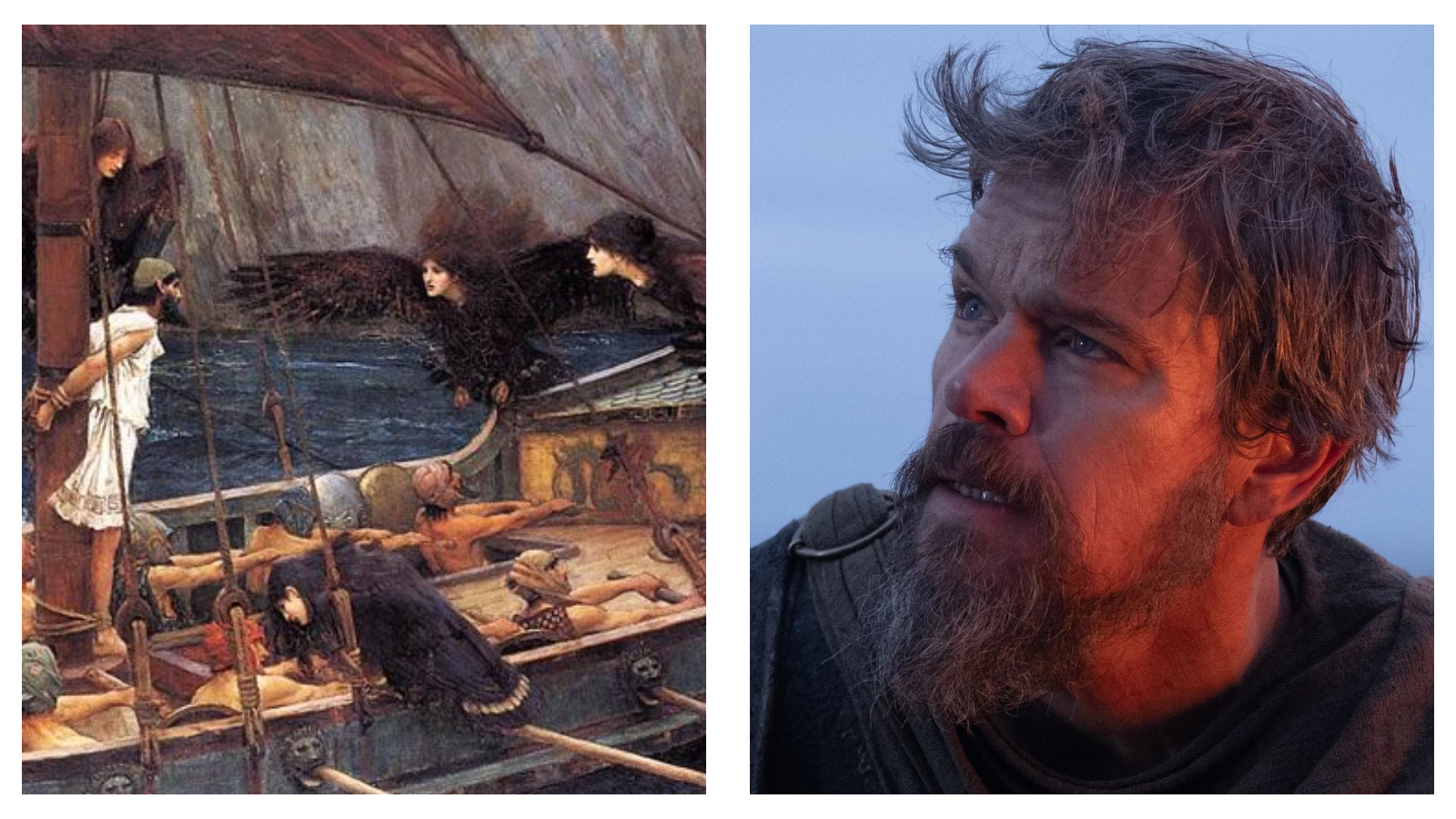
What changes did Christopher Nolan make in his movie adaptation of The Odyssey from Homer’s epic poem?
Film News Blitz writer and literature lover Olivia Davies is here to tell you.
Odysseus’ journey has been retold time and time again, translated, re-translated, and adapted for film, TV, theatre – you name it, he’s probably done it.
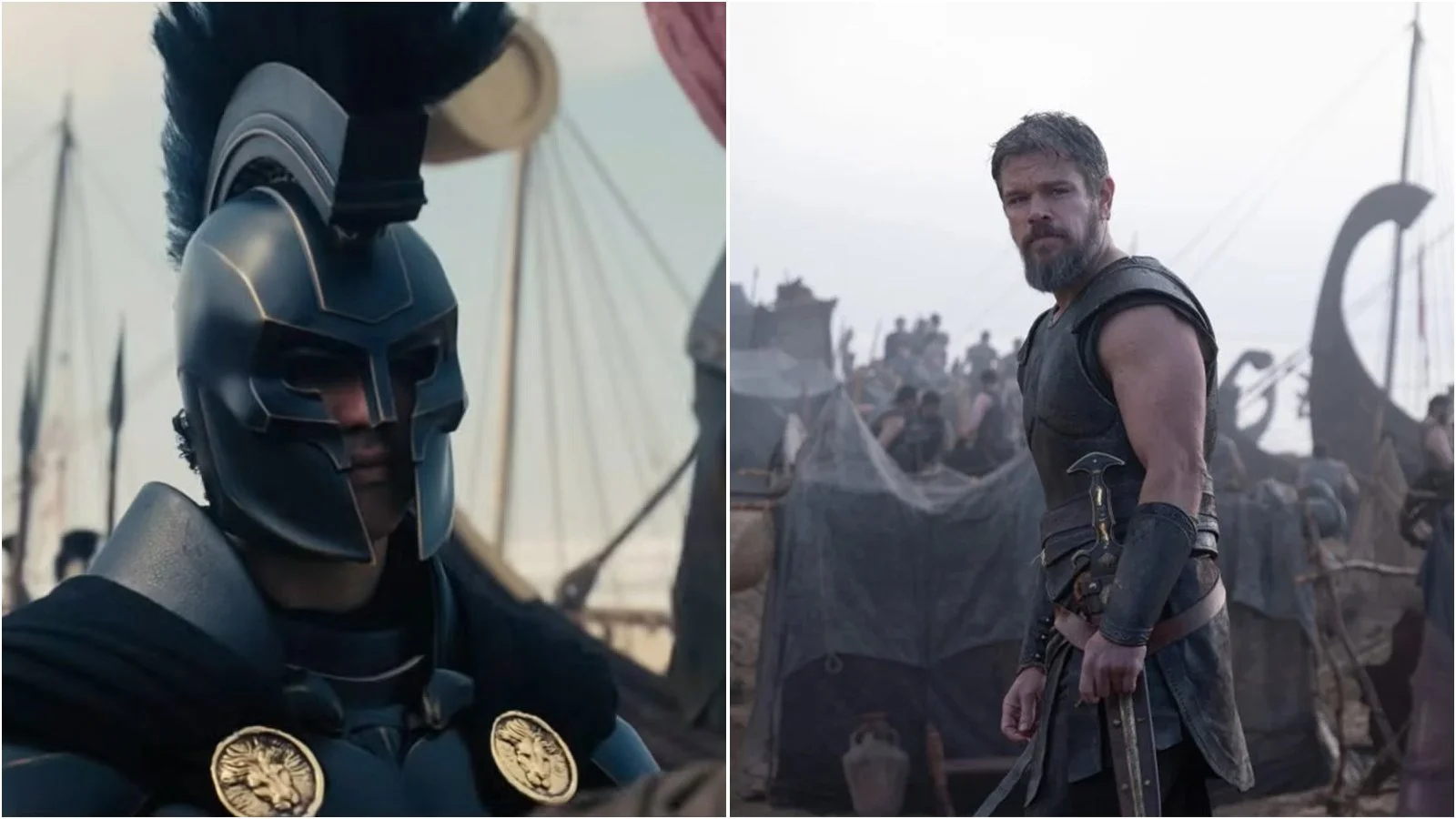
This time around, Odysseus and his men are sailing the seas in Christopher Nolan’s much-anticipated film that is being praised for its interpretation of the myth.
But with a beast the size of Homer’s Odyssey, there are bound to be some things that Nolan flitted past or just outright changed or left out.
As your resident literary geek, I’m here to pinpoint those decisions and find out how the book differs from its cinematic counterpart.
Calypso
Nolan shifted the structure of Odysseus’ journey quite a bit, cutting a few things and moulding them into other things that make the journey feel less episodic.
Calypso is still present in Nolan’s epic, and her role is largely the same but with some changes.
She is the dealer of the highly addictive lotus flower and uses it to protect Odysseus’ mind from the suffering he has endured.
She is also now the main literary device for Odysseus to recall his journey in a bid to remember what he has lost.
In both the film and poem, Odysseus spends seven years with Calypso, but whilst the movie Calypso says she always meant to let him go, Homer’s Calypso is a bit more selfish.
READ MORE – The real questions people are asking about Christopher Nolan’s ‘The Odyssey’
Calypso and Odysseus enjoy a rather fruitful relationship, with the nymph constantly enticing him with eternal youth and immortality – this is the start of Odysseus’ rather raunchy Odyssey, which isn’t dwelled upon in the film.
It’s only Athena’s fury that prompts Calypso to let Odysseus go as she pleads to her father, Zeus, to command Calypso to release him. Thus, he sends Hermes to deliver the message, and Odysseus is free.
This change, like a lot of the others, falls more in line with Nolan’s idea to portray Odysseus as a tragic figure who is working through the trauma of the battle in Troy.
However, it does take away some good old God shenanigans that are largely missing in the film.
Nausicaa
In Nolan’s adaptation, it’s Calypso that is privy to Odysseus’s retelling of his long, arduous journey. In the book, this person is someone completely different.
After Odysseus leaves Calypso on a raft, he finds himself battered and washed up on the shores of Phaeacia – decisively different from being taken straight home in the film.
Here, he meets the Phaeacians and their young princess Nausicaa, who plays a pivotal role in revitalising Odysseus and preparing him for his journey back to Ithaca.
It’s here that Homer really drives home the importance of Xenia, otherwise known as Zeus’ law.
Xenia is primarily shown through Nausicaa’s steadfast kindness when first encountering a washed-up Odysseus.
The maids that accompany her to the beach run away. But the princess chooses to provide him with food, drink, and a place to stay for him to recount his journey.
I can see why Nausicaa was omitted. Nolan presents the theme of Xenia in a different way that is still just as impactful, but it’s a shame to say goodbye to such important strong female representation in the poem.
Polyphemus
Now, from what I’ve gleaned in my time on the internet, it seems Odyssey fanatics are really bothered by the change found when Odysseus and his men encounter Polyphemus and his merry sheep.
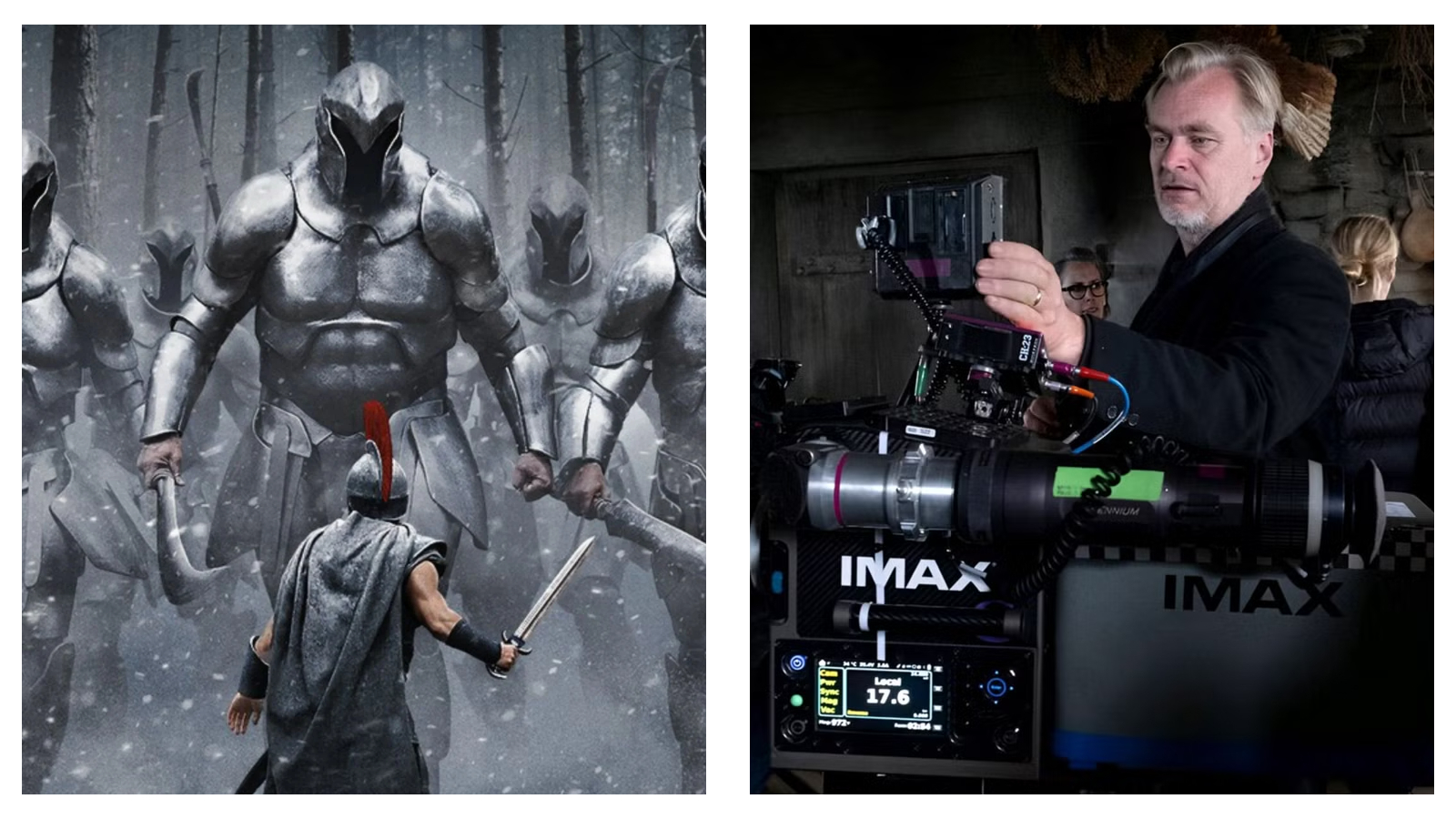
In the film, Polyphemus is shown as more of a monster who briefly speaks and simply kills his men. As monsters do.
Instead of the slow burn to escape the Cyclops, in the poem, Odysseus offers him a bottle of strong wine, which gets Poseidon’s son rather drunk.
YOU MAY ALSO LIKE – Film opinion: Who cares if Christopher Nolan’s ‘The Odyssey’ is historically accurate?
Polyphemus then asks for Odysseus’ name, which he says is ‘Nobody’ (this is a bit of a translation mishap, as ‘Nobody’ in Greek would have sounded like an actual name rather than a stupidly fake one).
Hence, when Polyphemus is struck in the eye and the crew escapes, his plea for help falls on deaf ears as his Cyclops brethren become rather confused when he screams, “Nobody has hurt me.”
How Poseidon later finds out about Odysseus is the fact that he childishly shouts his real name to Polyphemus when they escape. Not a particularly smart move.
In the book, all of this is played as a witty joke which aligns itself with Odysseus’ character of being cunning and a pattern of lies that end up working in the man’s favour (hello, Trojan horse).
Nolan’s reasoning for omitting this scene is an entirely fair one.
Whilst it is a beloved pun, it’s a pun that is very hard to translate and just couldn’t be effectively implemented into the film without it sounding like nonsense.
Circe
The last character who had a massive overhaul was the Enchantress Circe, daughter of the sun god Helios, who lives on the secluded island of Aeaea.
In both film and book, Odysseus’s crew is transformed into swine.
In the book, it’s just because Circe wants to. In the film, Nolan goes with a much more feminist take, which was a great change.
She states that the same men who sacked Troy would only end up abusing her hospitality and leave her in ruin if she let them in.
In response, Odysseus pleads with her to return them to human form so they can just go home to their families.
It doesn’t take much persuasion for Circe to do this after a struggle in which Odysseus threatens to kill her sister, who was turned into a crow.
However, in the book, Odysseus persuades Circe to release his men, and then they all enjoy a year of sex and sunshine for a whole year.
In some retellings, the pair even have kids together.
Another small change is how Odysseus seems to avoid Circe’s magic.
In the film, he simply wanders off to find food, whilst his men are lured to the witch’s home.
In the book, it’s the god Hermes who provides him with the plant moly, which protects him from Circe’s spell.
In both versions, however, the end of Circe’s story is the same.
She plays a key role in instructing Odysseus and his men in how they can get home, passing the dangerous waters where the monster Scylla and the sirens lurk.
What these changes mean for Nolan’s adaptation of ‘The Odyssey’
Overall, these changes are choices that don’t really do anything to thwart the meaning of Homer’s tale.
In fact, I think a lot of them make sense for what Nolan is going for in his interpretation of The Odyssey.
But what do you think? Did Nolan’s film adaptation bring the epic journey to life or dim its light?
READ NEXT – ‘The Odyssey’ review: Matt Damon and cast shine in Christopher Nolan epic