For decades, Hollywood has sold audiences the blue pill, while continuing to frame women as accessories to male experience, writes Film News Blitz writer Francesca O’Callaghan.
Even now, with claims of inclusion and empowerment, female representation on screen remains uncertain: celebrated when profitable, sidelined when inconvenient.
A recent study by the USC Annenberg Inclusion Initiative discovered that only 30 of the top 100 films of 2023 featured a female protagonist or co-lead – the lowest figure since 2014.
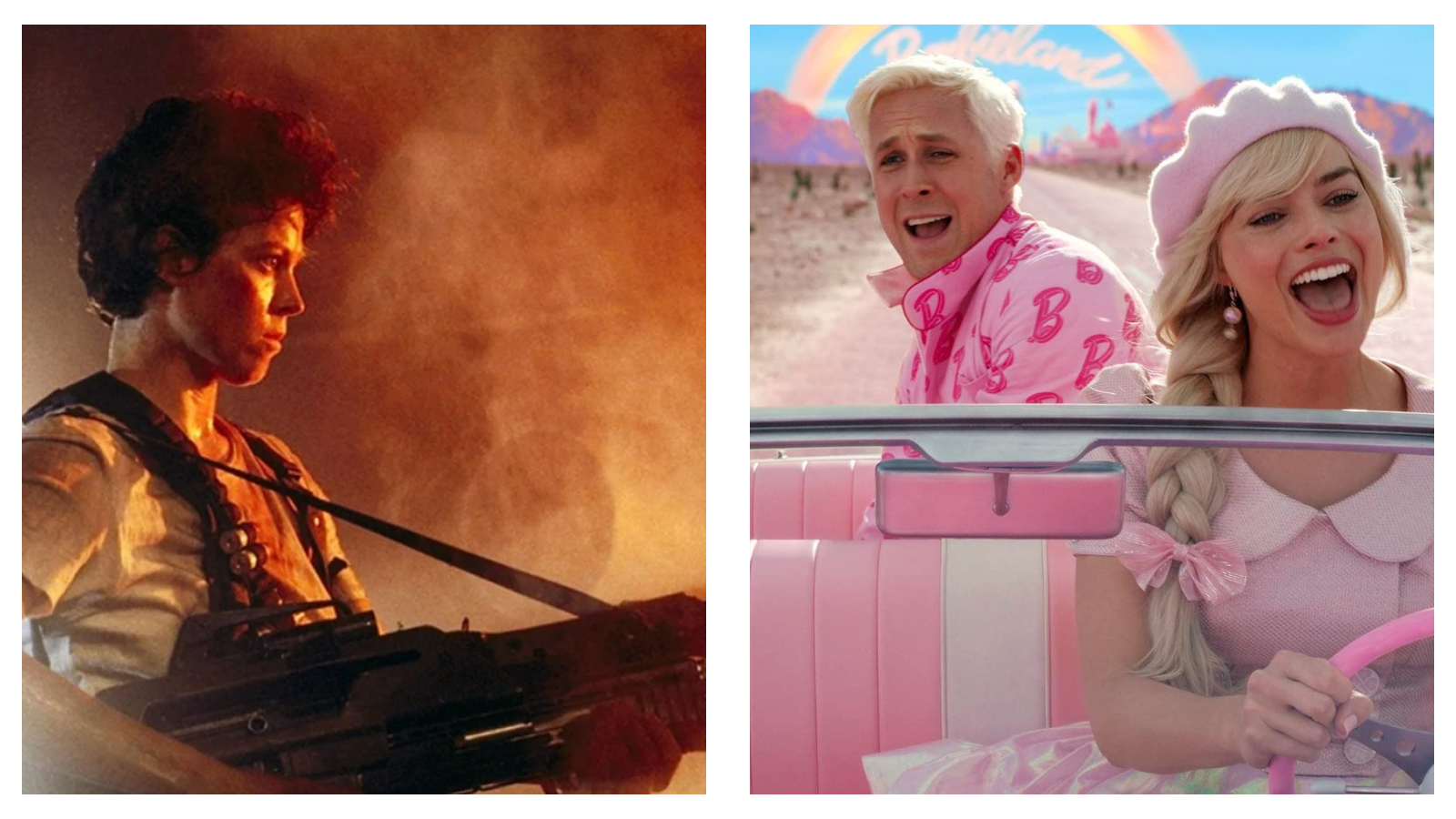
The statistic feels almost ludicrous in the aftermath of Barbie, a film that grossed $1.4bn worldwide and persuaded audiences that Hollywood had finally welcomed women-centred storytelling with open arms.
Yet the study’s authors warned against optimism, arguing that “one film cannot bear the burden of lifting the industry to inclusion”.
The success of a singular cultural phenomenon does not dismantle an industry historically designed by men, for men.
The false illusion of progress
Women occupied just 7% of cinematography roles and 9% of writing positions on films directed by men in 2023.
Only three women have ever won the Academy Award for Best Director – Kathryn Bigelow (2010), Chloé Zhao (2021), and Jane Campion (2022) – demonstrating that women are still fighting for permission to tell stories.
Men control the camera; women just circle around them, like a dog desperate for a treat.
They are merely wives, secretaries, femme fatales, damsels in distress, with a lack of their own voices and their own journeys.
The endurance of the ‘film bro’ theme – Fight Club, The Wolf of Wall Street, American Psycho – supports the idea that prestige cinema must be masculine, violent and emotionally detached.
Women in these films are frequently decorative, like a flower in a vase, rather than being viewed as someone important.
The men, meanwhile, embody the fantasy Hollywood has long sold to audiences: domination over emotional intelligence.
Women as subjects, not symbols
Film theorist Laura Mulvey famously portrayed this dynamic as the male gaze, contending that cinema positions women as objects of heterosexual male desire.
The camera lingers on female bodies while granting men agency, complexity and movement.
Women are looked at; men look.
But the emergence of the female gaze has complicated that tradition, with film and television increasingly exploring women not as symbols but as subjects: messy, contradictory, ambitious and flawed.
Shows such as Killing Eve flourished not because they present romanticised women, but because they allow women to have a say in the stylistic portrayal.
Desire, rage, shame, and humour are no longer reserved exclusively for male protagonists.
In 1976, scholars George Gerbner and Larry Gross coined the term “symbolic annihilation” to illustrate the effect of a lack of media coverage on marginalised groups.
If people do not see themselves reflected in culture, they internalise the idea that they are unimportant.
Cinema teaches audiences who deserves power, who deserves love and who deserves to survive.
Rewriting the female character
Films have taught women to aspire towards romance rather than autonomy, to fear ageing, and to equate beauty with value.
The archetypes became painfully familiar: the “cool girl”, the hectic pixie dream girl, the seductive secretary, the sacrificial wife.
Yet contemporary female characters increasingly reject those boundaries.
Ellen Ripley from Alien remains iconic because she was allowed intelligence and authority without yielding vulnerability.
For decades, “strong female character” meant a woman who fought like a man.
Now the definition of strength is expanding: emotional resilience, leadership, and intellect.
Women are finally being written as fully human.
The battle is not won yet
Women continue to account for only one-third of speaking roles globally.
The issue, then, is not whether audiences want stories about women. They clearly do.
The real question is whether the industry is prepared to relinquish the idea that male experience is universal while female experience is specialised.
Cinema has always shaped how society sees women and how women see themselves.
READ NEXT – ‘The Devil Wears Prada 2’ review: A strong, glossy sequel