Disclosure Day made its debut in cinemas earlier this week, with legendary ET and Close Encounters director Steven Spielberg returning to the chair for yet another fantastically whimsical sci-fi alien flick in what he himself has described as the third in an unofficial trilogy.
As a story, this film begs the question: even with an unknown impact, how big a secret could you keep from the human race? Here’s my take on Spielberg’s more spiritual and human take on Sci-Fi.
Limited spoiler warnings apply!
What’s it all about?
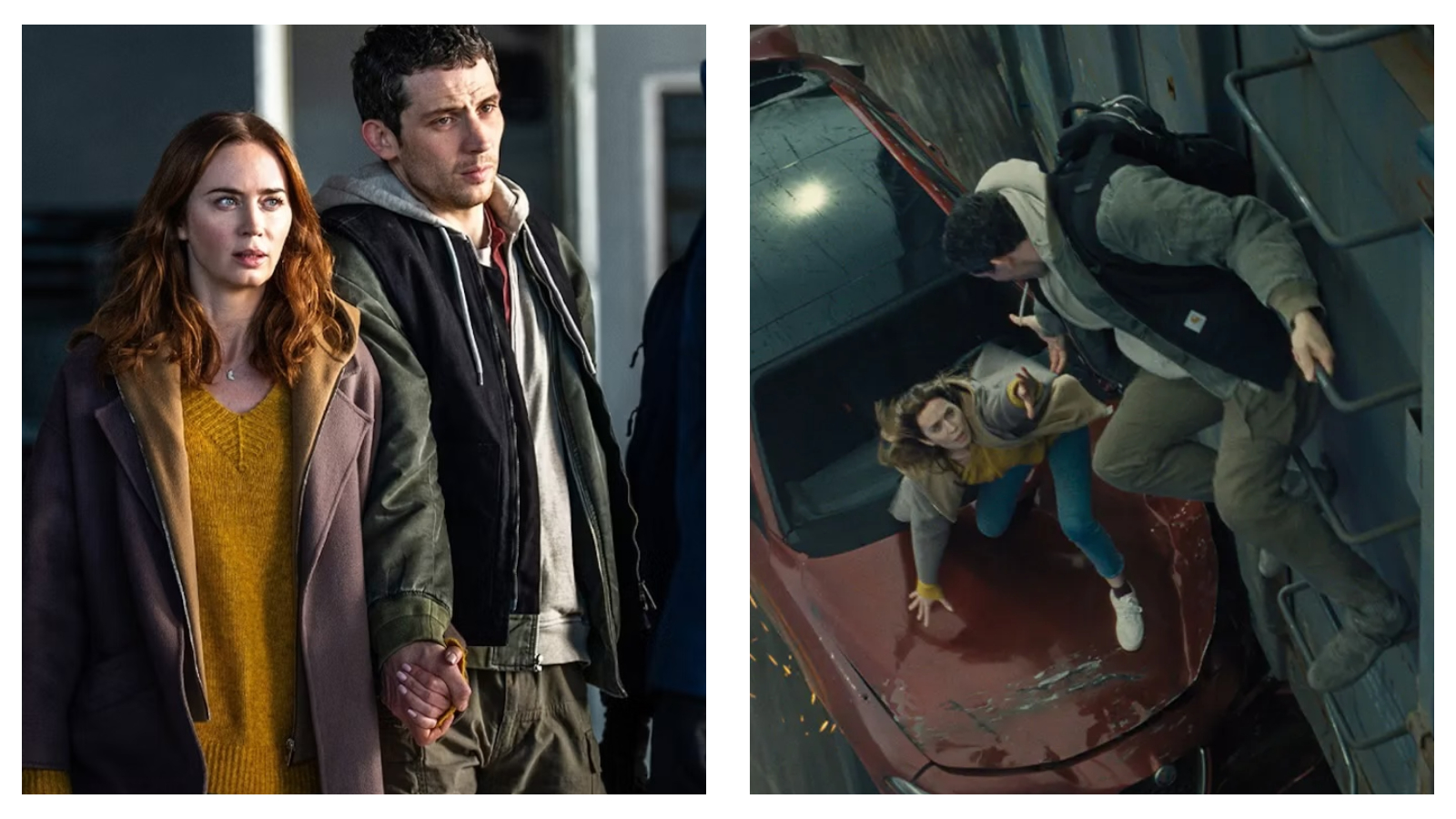
The story of this film follows cybersecurity nut Daniel Kellner, played by Josh O’Connor of recent Knives Out fame, and Emily Blunt as weather forecaster Margaret Fairchild, who notices unusually rapid improvements in cognitive ability.
The two lead characters are separate for the first half or so of the film. Still, both find themselves evading the pursuit of the Wardex corporation, a company that exists solely to monitor and prohibit the release or disclosure of extraterrestrial life and their contact with our planet.
Daniel possesses decades of evidence proving these events, having been expected to keep it away from the public eye, while Margaret is exhibiting symptoms of contact herself.
Both main characters struggle to comprehend the events that transpire, often with limited knowledge towards the bigger picture themselves.
That’s where the film opens, right into the action, when Daniel is detained by Wardex goons at a wrestling match, before he makes a heated encounter with their boss Noah Scanlon (Colin Firth) and the two engage in a seemingly high-stakes argument over some kind of seemingly extraterrestrial device found in his backpack – but more on that later.
The remainder of the film involves Margaret coming to terms with what seems to be a supernatural gift, and Daniel with his missing childhood, whilst also avoiding the grasp of Wardex through the help of Colman Domingo as Hugo Wakefield, effectively the boss of a company aiming to do the opposite of Wardex.
What makes it so good?
Throughout the film, we follow the perspective of the two characters with essentially the same amount of knowledge as they have of the events in the film.
For the majority, we know that Daniel wants to disclose this information, although as viewers, we’re not sure why.
The ensemble cast does not disappoint either, with the two leads supported by their partners, who are played by Wyatt Russell (Thunderbolts) and Eve Hewson (Bridge of Spies), providing a more grounded, human, “what the f*** is going on” perspective to the events that transpire.
That’s the biggest key to the experience as a viewer: You don’t really get a good look at anything alien until the story reaches its climax.
It keeps not only the characters but the audience in suspense and wonder at the prospect of disclosure, holding viewers in suspense, right on the verge of knowing everything, whilst still not quite grasping the fuller context.
There’s also a lot of biblical and religious influence, at some times more explicit than others.
The two leads, male and female, are individuals somewhat blessed with some sort of gift from a higher power, but are also supported by characters who have deeper ties.
Daniel’s girlfriend, Jane (Hewson), is deeply affected by her past as a nun, questioning her faith greatly as more and more is revealed to her.
The cinematography also impresses, with viewers being treated to a wide variety of camera work ranging from long, single-take sequences to first-person or deliberately vague shots that keep the wonder alive while still making the subjects feel plunged into high-gravitas situations.
There’s a moment in the very final act that says a lot about humanity, wrapping everything up with a final scene that cheekily keeps the wonder alive, but that’s something for you to see for yourself.
It’s this eye for spirituality and wonder that allows Spielberg to constantly hit beats reminiscent of his previous works, while still holding a modern appeal and lens to a world full of conflicting (not just in religion) beliefs.
The not-so-good
It’s naturally subjective to think of stuff that’s not as good in a film, but there are a couple of things that stuck out to me. Unfortunately, it’s a big portion of the story.
To start with, the previously mentioned “device” that is sought after by Scanlon and his Wardex goons at the start of the film.
The device, a sort of rod-shaped piece of alien technology, is undoubtedly significant to the plot in ways that would be a shame to spoil, but is one that just feels more suited to written work than visual storytelling.
The rod, when squeezed or held, can provide the user with somewhat divine abilities – appearing in their head or controlling their actions, for instance.
It’s a great way to make the bad guys seem dangerous, while also giving the protagonists more stakes with regard to what is in their possession, but for me, it just looked rather awkward visually.
The imposing and cunning villain, sitting in a room full of jargon-filled screens, holding onto a rod menacingly, just didn’t work for me as a visually powerful or intimidating image.
It works in the plot, sure, and definitely is relevant, but it just didn’t work for me.
Any other complaints would probably depend on what you expect heading into it.
If you expect a full-fledged sequel to E.T., or people running in terror as laser beams destroy cities and abduct livestock, you’re not going to get that.
For me, that’s fine, but it’s easy to see why many others might not want that from the movie.
The first third of the film also drags slightly, but it’s in a way that only builds suspense as the viewer is drip-fed information that only brings more questions than answers, something that is undoubtedly intentional and again, works for me but not for others I have spoken to.
Overall thoughts
Disclosure Day is such a unique film that it may even be unfair to call it an alien movie.
Not classically, anyway.
Yes, the plot revolves around aliens and disclosing their existence to the world, but at the heart of the story is a mirror being held up to humanity and its flaws.
The background of the film is one of war, conflict, and divided perspectives – much like the real world today.
This film takes its very real-feeling ensemble cast and uses them to bring up questions as to what really matters.
Watching this film creates an atmosphere of suspense and unsettlement, paired with the whimsy of wonder and compassion.
What should human priorities be, and how could something like a great disclosure put everything into perspective?
It’s about aliens, yet ironically so down-to-earth and close to humanity that it really hits all the beats needed to be held amongst Spielberg’s other iconic spaceman films.
Disclosure Day is out now in cinemas, go check it out, but with an open mind. It might not be what you expect, but undoubtedly not something you’ll regret.
READ NEXT – Film news: ‘Disclosure Day’ cast pick their favourite John Williams scores