We still love them. We even still quote them, but make no mistake, these films would never be greenlit today.
Film News Blitz writer Jesse-Ann Baron looks at why three beloved films would never survive a modern pitch room.
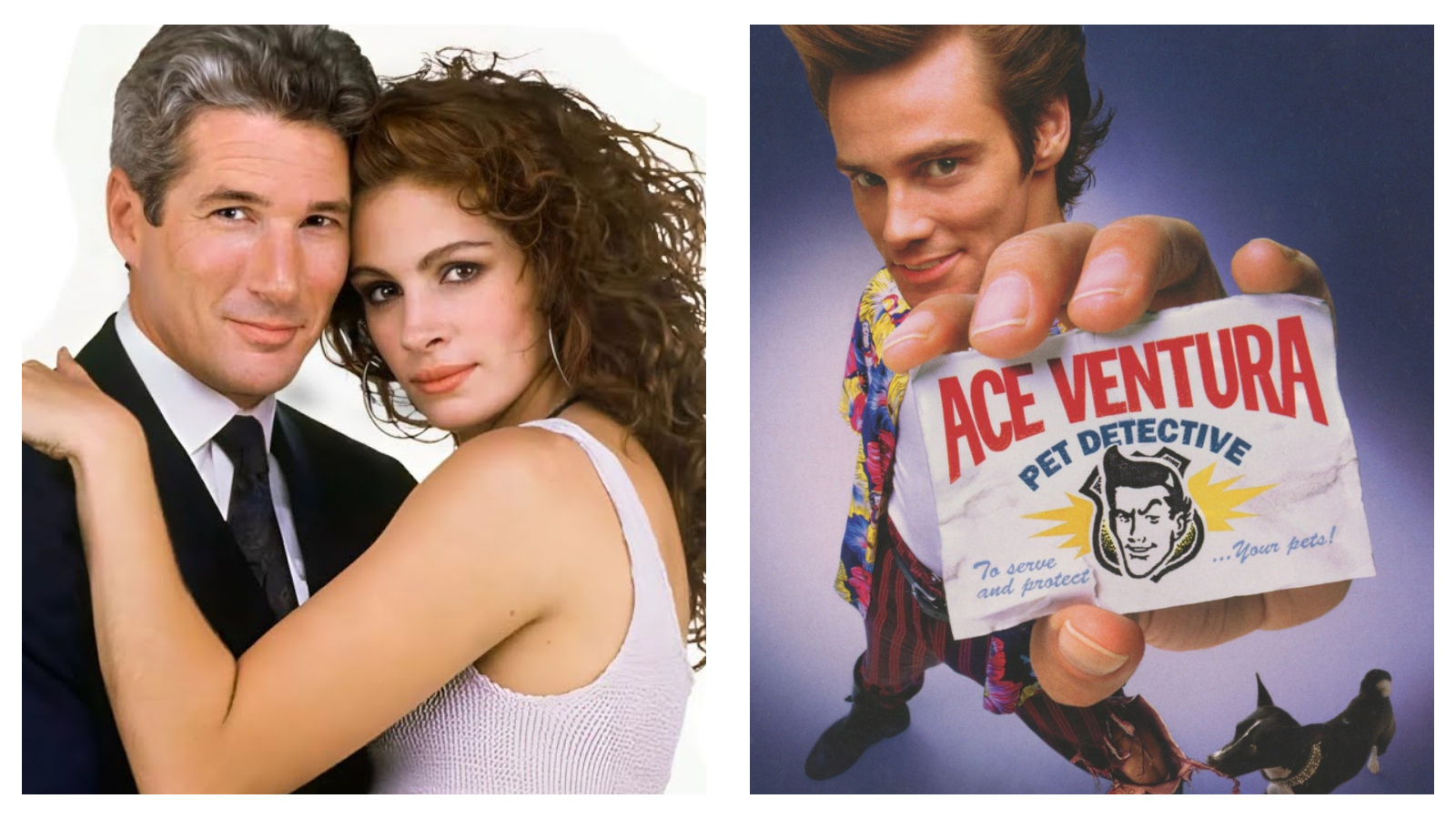
‘Pretty Woman’ (1990) – Romance or red flag?
The 1990s was the era of the rom-com, often considered the golden age for romantic comedies.
The genre was defined by classics that are still referenced today, and Pretty Woman is considered one of the most iconic.
It follows Edward, a wealthy businessman played by Richard Gere, who hires a prostitute to be his personal professional escort.
The talented Julia Roberts plays Vivian, a high-spirited prostitute who receives payment for accompanying Gere’s character to high-society events for his work.
The age-old story of the prostitute and the wealthy man obviously ensues, with both of them falling in love.
The premise is…strange, but romantic because it’s Richard Gere and Julia Roberts.
Now, by today’s standards, this would simply never be done.
There are a couple of issues, but the first is the extreme power imbalance between the main characters.
Vivian’s circumstances as a struggling sex worker in Los Angeles are treated as a quirky backstory in the film and not properly addressed.
Her job as a street-level sex worker is somewhat Disneyfied for audiences, and the realities of this life filled with abuse, drugs and danger are hidden.
There is an overall lack of nuance when considering her job, all brushed away with a big makeover.
Edward takes Vivian shopping, and he dresses her in clothes that he approves of. He basically takes away all her choice in the matter.
Everything from her hair to what she wears at every event is curated by Edward, so that she is somehow brought to his level.
In the film, the things Edward considers to be romantic would be seen today as just toxic behaviour, in particular the makeover.
In the end, there’s the iconic balcony scene, where he climbs up like a knight in Vivian’s dream story, and when he asks what happens at the end of her story, she replies with, “she rescues him right back.”
Modern audiences would not have liked her happy ending, which depended on some rich guy choosing her after a week as his escort.
In summary, the film lacks female agency, supports consumerism, sugarcoats sex work, and has a striking power imbalance.
I think the age-old trope of the wealthy, emotionally guarded man who rescues the unrefined, low-class woman is outdated.
It’s still a classic film. But without a doubt, it would be cancelled today, and if greenlit, there would be backlash.
Everyone should still appreciate this classic, otherwise, it would be, as the popular line goes in the film, a “Big mistake. Big. Huge.”
READ MORE – The real questions people are asking about Christopher Nolan’s ‘The Odyssey’
‘White Chicks’ (2004) – Too much to unpack
This film is so iconic that it is still in pop culture today.
Many quotes and scenes resurface on social media platforms and are easily recognisable over 20 years later.
This classic comedy was produced by the popular Wayans family. It’s about these two African-American FBI agents who go undercover.
The humour comes in as the agents go undercover as rich white female heiresses to prevent a high-profile kidnapping plot.
The film employs whiteface, which sits in a grey area when it comes to acceptability, whereas blackface is unacceptable and has a long discriminatory history.
In today’s sensitivity-aware pitch rooms, this would require some persuading of producers.
Although White Chicks has a huge cult following, it is very rigid in its thinking for modern audiences’ standards.
There are clear gender stereotypes, and it contains many outdated jokes with transphobic undertones that would have to be removed if made today.
The film has a lot of low-brow comedy with body and slut-shaming tropes around eating disorders, body-shaming and crude sexual scenarios.
In the modern day, the jokes would need to be updated as people are less accepting of jokes that put down others.
The film itself would definitely have some backlash. But if updated and changed slightly, it could become as great a film as the original by satirising white privilege and the superficial nature of high society.
It is still a boundary-pushing comedy.
YOU MAY ALSO LIKE – Film opinion: The five best, and the worst, film-to-stage adaptations
‘Ace Ventura: Pet Detective’ (1994) – The punchline didn’t age well
The king of modern slapstick comedy, Jim Carrey plays an obsessed lover of animals who is a private investigator trying to find a kidnapped star quarterback and mascot.
Jim Carrey plays Ace Ventura, and it is a beloved film that is slightly unhinged but perfect for Carrey.
In the third act of the film, the climax revolves around the revelation of the police lieutenant being a transgender woman.
This lieutenant is the villain in the film. However, everyone in the station found her attractive, and Ventura even kissed her.
Once they find out she was born genetically as a man, they are all shown to be horrified, with the camera lingering on their visible disgust.
The film shows police officers vomiting and Ventura having a complete meltdown by crying, burning his clothes, plunging his face in the toilet and aggressively brushing his teeth.
Later, Ventura tears off her clothes against her will to expose her underwear to reveal her anatomy. He ultimately humiliates her in front of the crowd.
Today this would never be greenlit because punching down on a marginalised community just for shock-value humour is not acceptable.
The 90s was full of films that use ,gender identity or sexual orientation as the punchline. But with Ace Ventura: Pet Detective it was more documented and blatant because of its slapstick form and that it became popular.
These films are a product of their time – the question is whether that is an excuse or an explanation.
Maybe we can all love a film and still acknowledge its flaws.
READ NEXT – TV analysis: Is Netflix dumbing down shows on purpose to accommodate scrolling?