Damian McCarthy’s newest horror film, Hokum, continues the director’s trend of intuitive scares, set amongst Irish folklore.
Few contemporary horror filmmakers reach the heights of McCarthy’s ability to utilise his environment and deliver a sense of constant dread, despite his writing hindrances.
Film News Blitz’s Oscar Trinick gives us his thoughts on this Adam Scott-starring horror film.
Brief overview
Damian McCarthy is an Irish director and writer whose most notable feature film works include Caveat and Oddity.
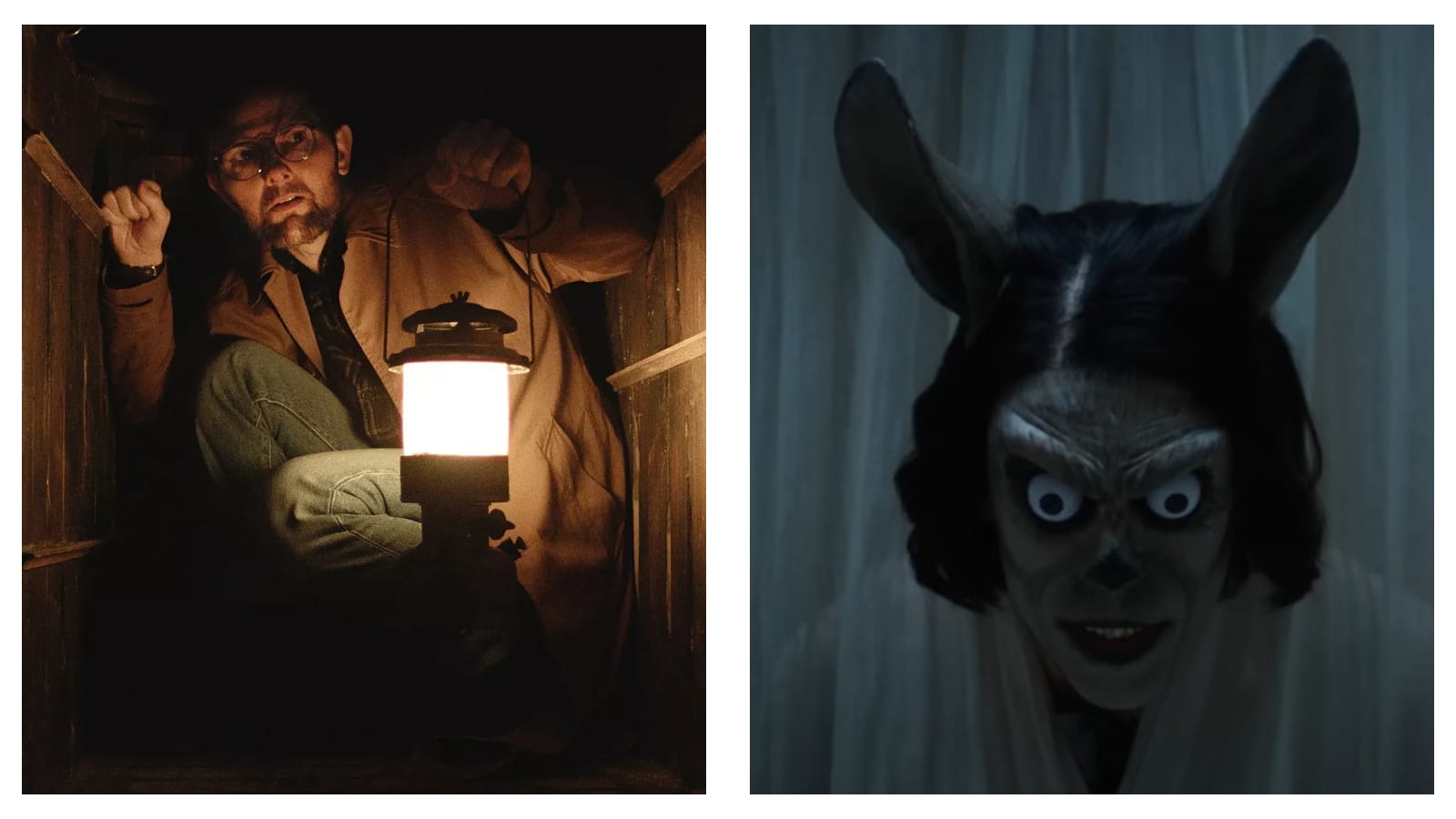
His newest film, Hokum, stars Adam Scott (Severance) as fictional American novelist Ohm Bauman.
The film follows Ohm as he ventures to a remote inn amidst the Irish countryside to scatter his deceased parents’ ashes, only to find something haunting the hotel he’s staying in.
The horror landscape
One thing that makes McCarthy stand out in comparison to his contemporary horror counterparts is his recognition of the importance of the space around him.
It’s something that seems so minor in essence, but it acts as a staple gear that can be well-tuned to dial up the continual dread-filled atmosphere, which is often missed by faithfuls to the genre.
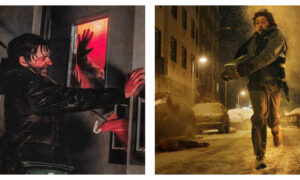
Whilst Hokum is set around one hotel, it’s in the back half of the film where McCarthy deploys an extended set piece in the haunted honeymoon suite of the inn, in which his formal rigour really shines brightest.
His formal rigour comes from his patience behind the camera, and whilst I think this film does offer a few more loud and cliched jumpscares than I would’ve wanted, his tension between these moments is frequently sustained in a manner that western horror refuses to engage with.
Environment utilisation
Within this extended set piece, McCarthy uses gimmicky video game-style puzzle sequences that never fall too far into complete lunacy, but just enough to build an environment that genuinely feels like a functional aspect of the film, and not just background filler.
His utilisation of negative space also heightens this sense of formal precision to his horror filmmaking; there isn’t really any amateur shaky cam to ruin these moments, but rather a stillness to his framing of enclosed spaces, which are defined by what both exists and doesn’t exist within the vastness of the widescreen space.
This film offers a look into the sadness of the current horror landscape. Should I have to praise a film for at the very least showing a sense of distinctive direction that isn’t lifeless centre framing and loud scares?
Unfortunately, formal competency is something that rarely exists between films of a single filmmaker, but Damian McMarthy is definitely a man who is able to sustain that, and Hokum is a neat display of such talent behind the camera.
Pen and paper
McCarthy’s weaker tendencies lie in his screenwriting; unfortunately, ironic, considering our protagonist in this is an author.
The most frustrating thing about this film is that McCarthy’s talent behind the camera is weighed down by the vague storytelling on display.
He often dips his toe into eye-rolling trauma signifiers, championing the odd flashback or tacky childhood death as a motif of his work, trying to find a backing for his strict horror techniques.
As I mentioned previously, in this lies the desperate reality of contemporary horror: the delusional need for suffering as a preface for character, like it has to exist to propel some motion of an arc forward, when in reality it frequently only moves things backwards.
This film functions best when it isn’t relying on the essence of the past, when it doesn’t feel obligated to contain itself in its own traps.
Rather, when its quietly rambling characters, spewing conspirational nonsense about the face of evil, are the front and centre of this picture; when McCarthy’s rigid camera work enacts total control over your fight or flight reactions.
READ NEXT – Film opinion: Is ‘Hokum’ deserving of the high critics’ ratings?